No Pitches, Just Real Talk: How We're Building Chili Piper's Future, in the Desert
What happens when you bring together more than 150 SaaS leaders and give your team only a week to prepare? This is how the company pressure-tested their product vision in real life, in the desert, with no slides and no fluff.
Since launching the Demand Conversion Platform in June 2024, the team has been asking: "Where do we go from here?"
They kept hearing the same pain points from marketers and revops practitioners:
- Too many channels, not enough signal.
- Can't find the right people.
- Sales and marketing still don't speak the same language.
- "I need to do more with less."
Turning an Idea Into Reality
That observation led to one idea: Demand Orchestration, a smarter way to turn intent into action. This involves automated marketing workflows that help GTM teams convert their pipeline effectively.
The concept centers on "One platform. Personalized workflows. Activating the right people, at the right time, in the right channel."
The challenge was significant: a big vision with no clear starting point. The term "Demand Orchestration" sounds appealing, but what does it actually mean? What do teams really need? And what are the biggest gaps in MarTech today?
The opportunity arrived unexpectedly through ChiliPalooza, their first in-person event, packed with Marketing and Revenue leaders. The catch? They had ONE week to turn ideas into something testable live.
Chilipalooza — 150+ MarTech and Revenue Leaders in the Desert
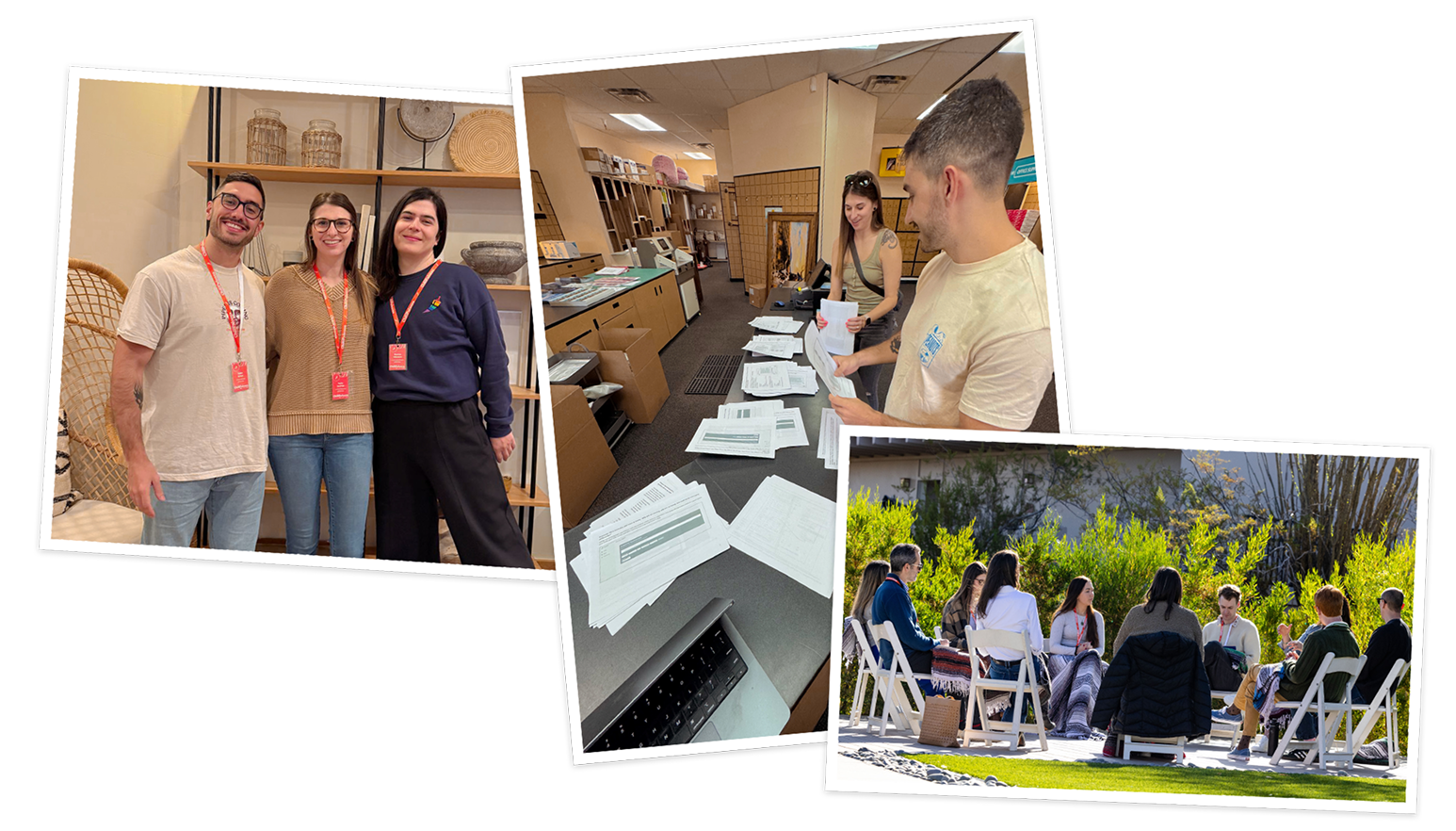
As the product team explored different visions of orchestrators for automating painful processes, the Marketing team organized ChiliPalooza in Arizona.
They saw an opportunity to help build the future of Chili Piper with their community, but faced several challenges:
- One week to prepare everything and travel to the desert in Arizona from 3 different countries.
- Their involvement had to be carefully crafted, as the event had an explicit 'no-pitches' policy.
- They had to fit their research within an already established schedule.
The outcome exceeded expectations.
How Did We Do It?
The team knew they were going to conduct research but weren't certain what exactly they would be researching. First, they created alignment with stakeholders on what needed to be learned, then decided how to do it. Instead of selecting just one concept, they decided to test several ideas and observe reactions.
They selected 4 strongest concepts and outlined:
- A short summary — what does the product do?
- Value Proposition — what problem was it solving?
- Use Case — how and where would people use it?
- Storyboards outlining the use case with a real example
The goal was to focus on ideas rather than designs, so they kept it simple with wireframes and storyboards rather than fully built-out prototypes.
ChiliPalooza encouraged digital disconnection and human connection. To match that spirit, they decided to print storyboards on paper to discuss with participants.
In 2025, they showed ideas for software printed on paper to actual humans physically in real life.
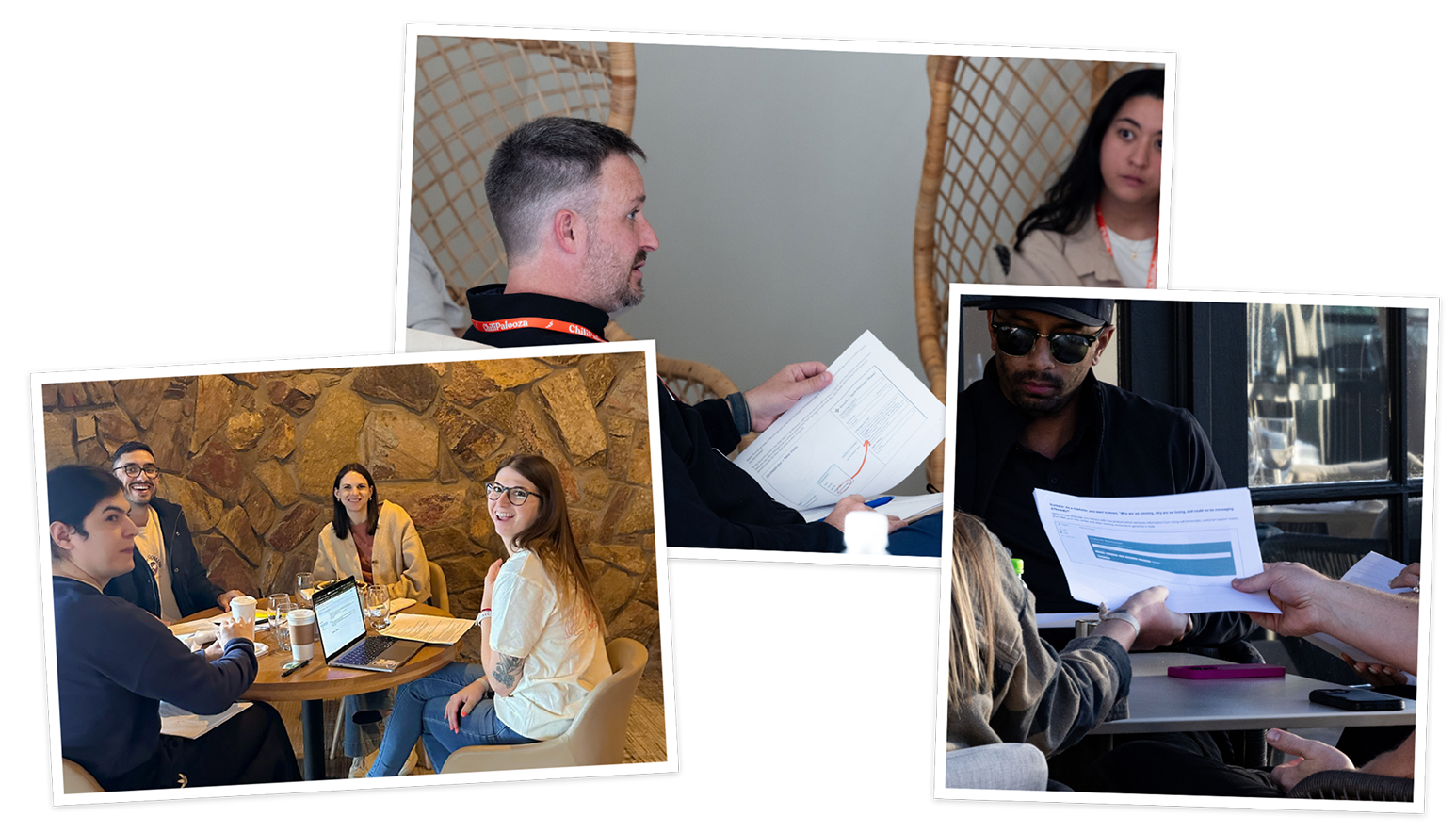
The Setup: People Over Pitches
ChiliPalooza was about connection, not selling, which meant they had to play it cool.
They handpicked 30 attendees for feedback:
- CMOs and Marketing Execs
- Individual Contributors
- Revenue + Ops leaders
They sent direct messages a few days before the event.
Their mission: walk attendees through each idea, get gut reactions, and rank what mattered most.
The Days of the Event
The team consisted of 3 on-site researchers: Andre, a Product Manager; Mauricio, a Product Designer; and Taylor, a Researcher.
They had to remain flexible, since they were a late addition to the event and didn't want to take away from attendees' experience. Gathering insights was important, but fostering authentic human connection and learning was even more critical.
They ran 1:1s and small group sessions over 3 days, wherever possible — in the restaurant, the hotel lobby, and the terrace during lunch, basically anytime they could secure 30–45 minutes between already scheduled sessions.
Mid-event, one of their co-CEOs made a strategic move. He set up a bonus session with 4 top sales execs.
Why? To pressure-test their ideas from the GTM side: messaging, positioning, real-world sellability. It gave them a whole new angle they wouldn't have seen otherwise.
What We Learned: Way More Than We Expected
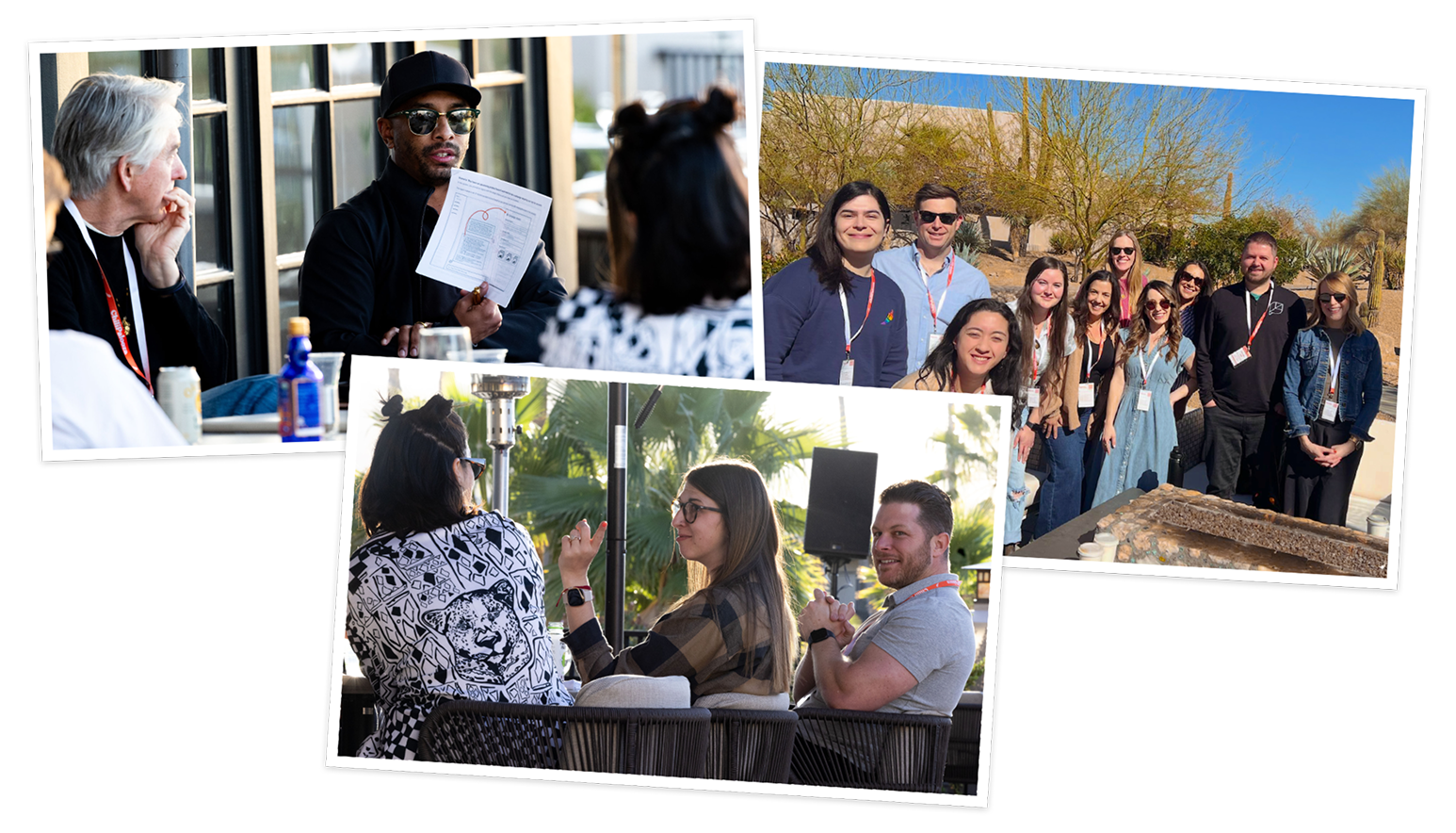
In just 3 days, they ran 18 sessions, recorded 12+ hours of feedback, and filled notebooks with insights.
They went to ChiliPalooza expecting to learn about their 4 concepts and the future of MarTech from industry leaders. What they didn't expect was how powerful it would be to be in person with the people they build products for.
The people they met are helping build Chili Piper's future, but they also reminded the team of one thing: "tools and systems are built for people." There's an actual human behind the interface designed every day. That was perhaps the most profound learning.
As for the future of MarTech, here's what stood out:
1. People want help, not control.
They're comfortable with AI doing routine tasks (such as account or contact research), but they don't want it to make major decisions without human involvement.
2. First-party data is underused.
Handled right, it's a power tool. Handled wrong, it's noise.
3. Workflows > Dashboards
People want fewer tools, not more. But what really matters? Seamlessly fitting into their existing stack.
4. AI = Assist, not Autopilot
Smart suggestions and nudges equal yes. Black-box magic equals nope.
What's Next?
They're taking what they learned and building the next version of Chili Piper: smarter, simpler, more connected.
The specific ideas they're moving forward with remain under wraps for now.
However, those curious can become design partners and get early access by signing up.