How 17 SDRs Booked 580 Meetings in Q1
What if only 17 SDRs could book 580 meetings in a single quarter?
That's exactly what our team did in Q1. We surpassed 172% of our goal for SDR-sourced Closed-Won $. We did that by hitting 102% of our goal for Qualified Meetings Held.
Over the last two quarters, we converted 40% more Closed-Won ARR per dollar of pipeline than the year before. We've gotten more efficient at booking quality meetings with happy prospects that turn into happier customers.
Here's how we did it:
1. We built a repeatable and scalable daily process for our SDRs
Having a daily process is essential for our reps' success. But it's not a one-and-done system. We continue to evolve and adapt it, maintaining the best process for our team.
To find those relevant prospects, we use a free tool called Magical Text Expander — this gives our SDRs the boolean searches they need to populate the best fits on SalesNav.
To make sure we're working each account and prospect efficiently, we have daily standards of follow-up on email, LinkedIn, and cold-calling. The daily baseline is:
- 200 emails
- 30 calls
- 15 LinkedIn messages
Based on what's working for our top reps and across the industry, these numbers adjust over time to ensure we're not wasting any activities. Across a team of 17 reps, each inefficiency is costly.
To ensure our process continues to improve, we lean on each other (managers and SDRs) as well as other teams across Chili Piper. And we also lean on our Coaching Checklist to make sure nothing slips through the cracks over time.
2. We have a message that resonates
Our early SDRs worked hard to create and prove the success of relevant messaging that resonated with our ICP.
One example of this is taking a quick screenshot of our prospects' Request a Demo Form and tailoring the message to how we could help qualify, route, and book their inbound leads.
By making our messaging about our prospects, we found a repeatable way to be relevant to them and stick out against the hundreds of cold-email they receive per week.
Here's an example of one of our highest-performing emails:
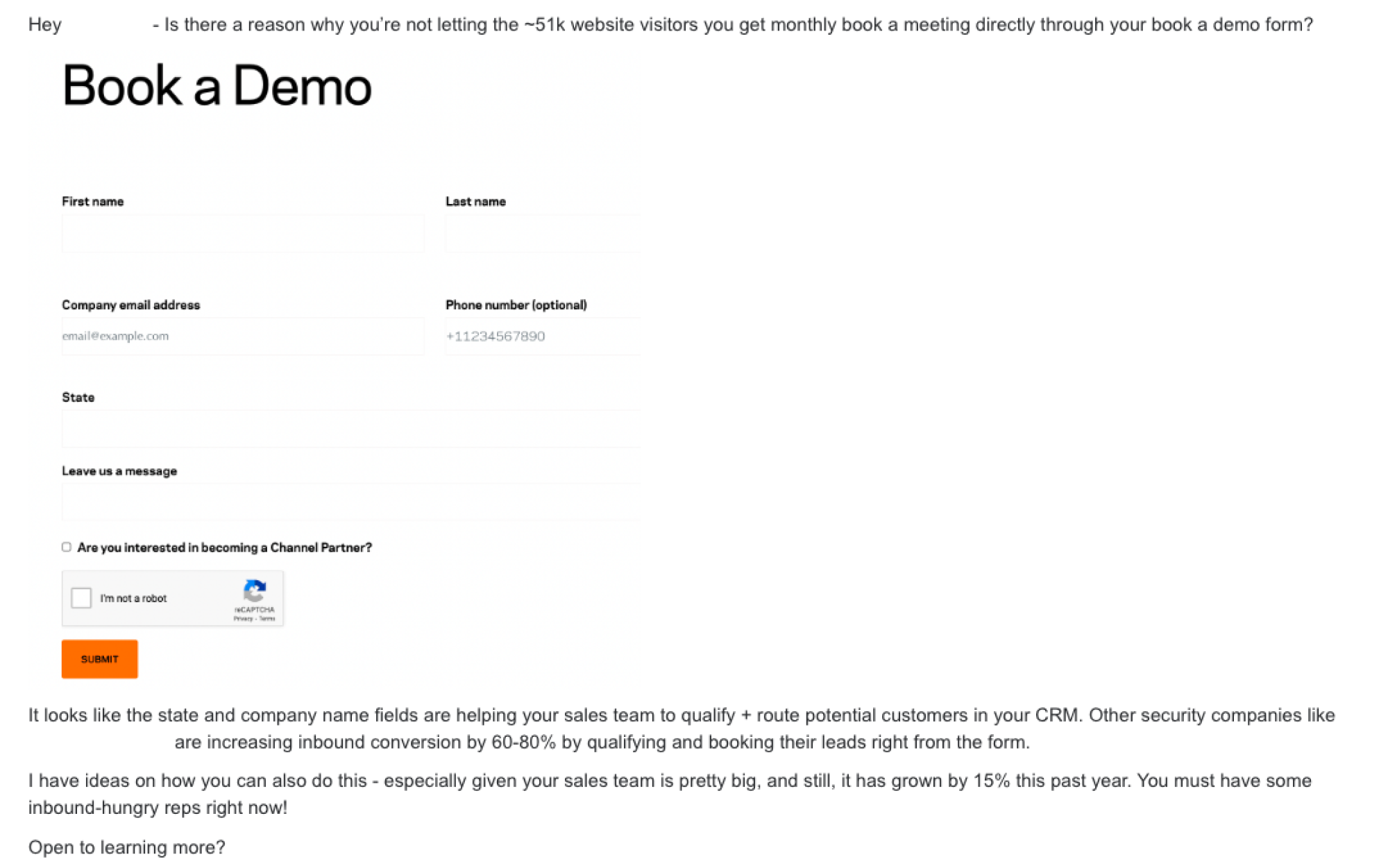
"Hey [first name] - Is there a reason why you're not letting the 51K website visitors you get monthly book a meeting directly through your book a demo form?"
3. We have an awesome tech stack
Here's everything we use:
Salesforce
Our single source of truth for everything. And where we see all our meetings booked through Chili Piper.
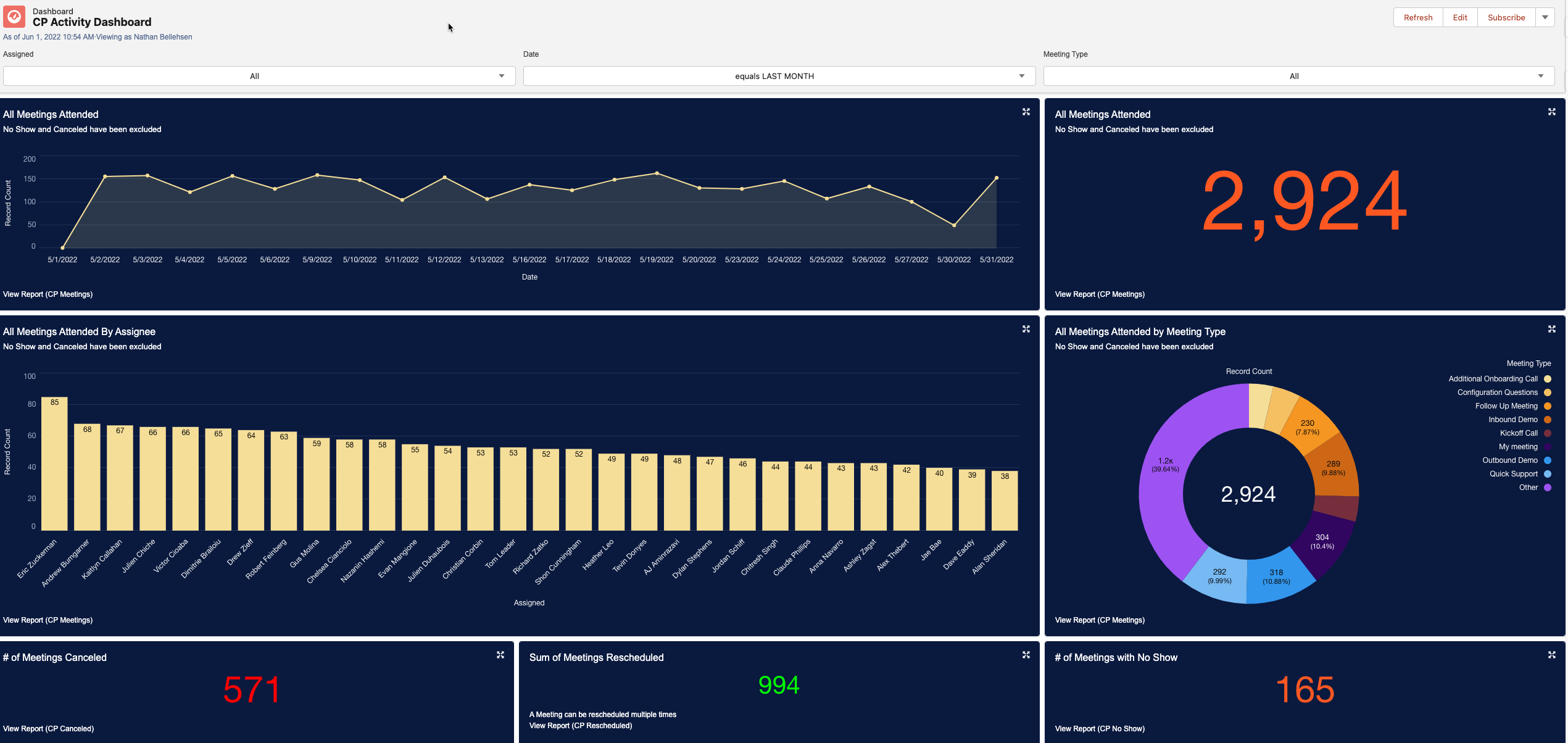
Also, our Sales Ops Wizard, Phil, changed the color of our interface last year to make it a slightly darker shade of blue - game changer.
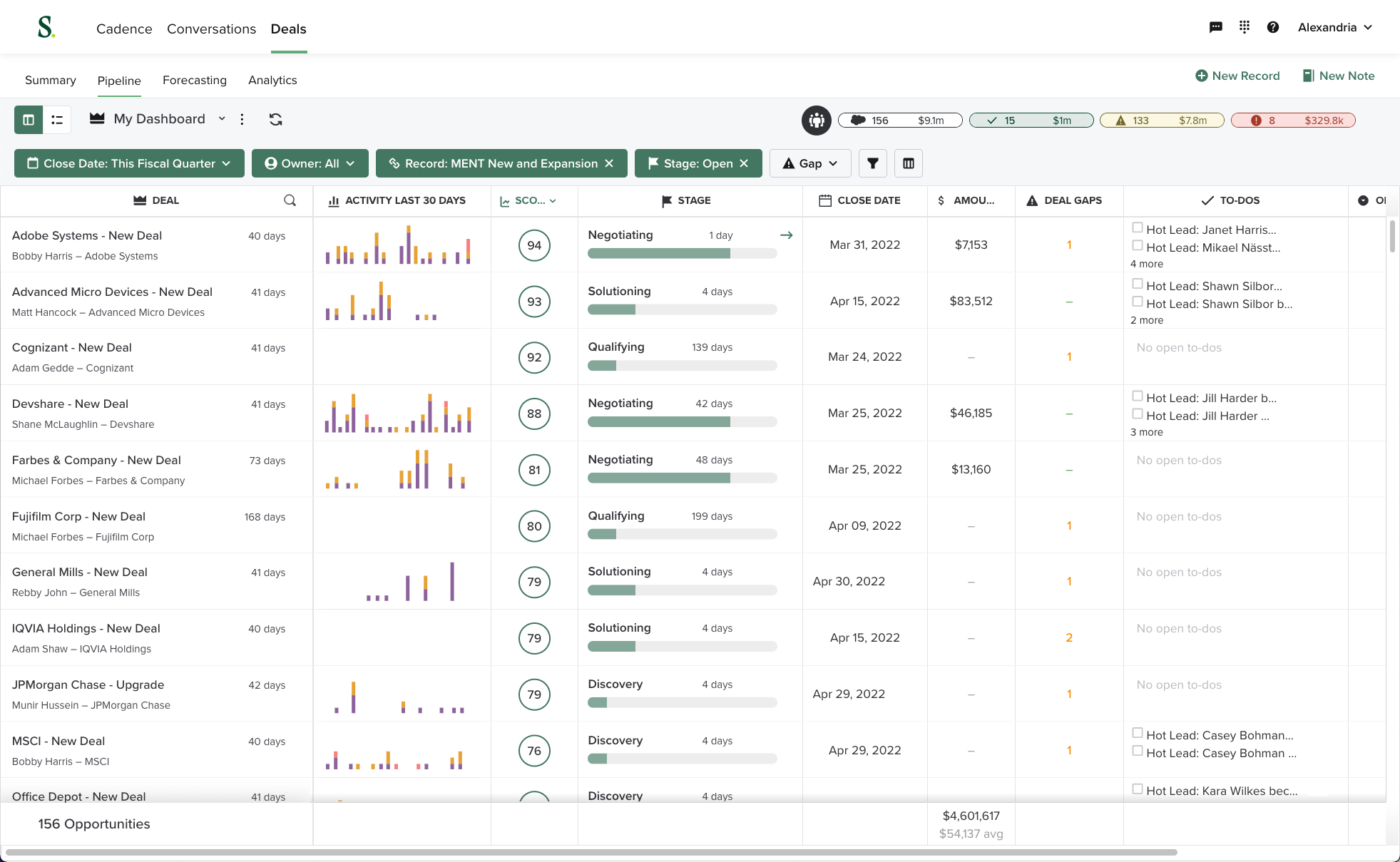
SalesLoft
Best place for refreshing the URL constantly to see how many times your prospects open your emails while not responding.
We also use SalesLoft to automate our cadences for no-shows, webinar leads distribution, and pretty much any other email we have to send out.
LeadIQ
The answer to "how on earth did you get my number?" - sorry, Chris.
We also get our emails from our LinkedIn Navigator research from LeadIQ.
Chili Piper
So our SDRs can book meetings on behalf of AEs while they're on the phone or right from an email.
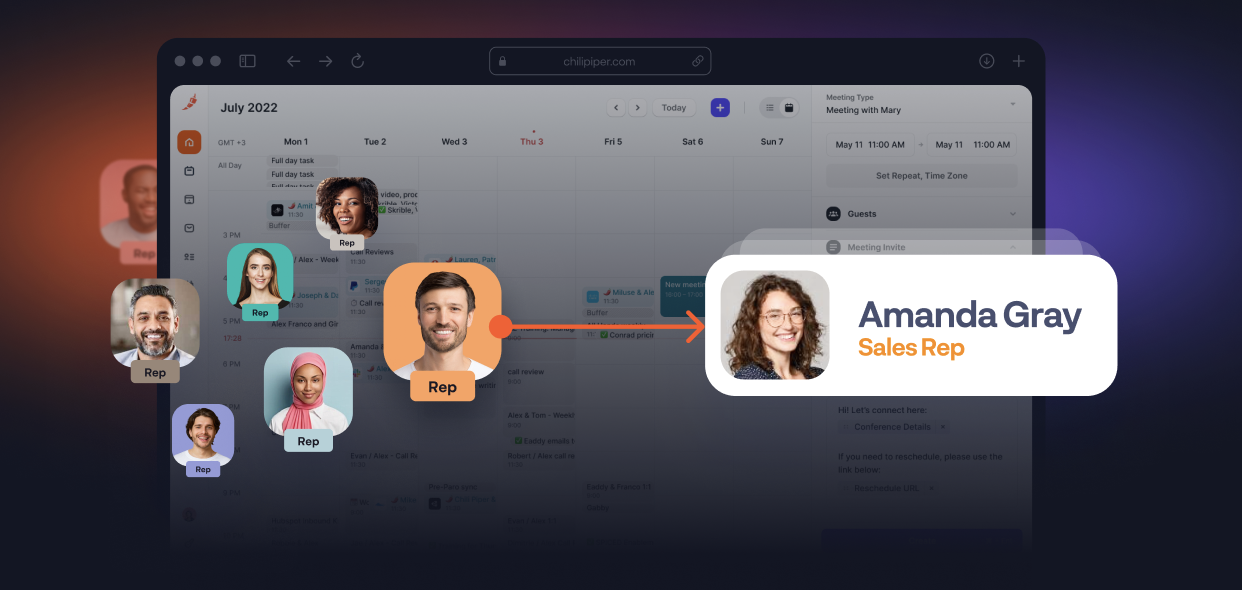
Chili Piper automatically routes to the next AE in the round-robin queue, which means our reps don't need to scramble through a spreadsheet to find the right rep.
Our SDRs have very simple qualification criteria they get from prospects to know that they are a technical fit for our products. Once they get that, they use Handoff to book directly to correct AE in one click. As soon as it's booked, an opportunity is automatically created in Salesforce, with the AE and SDR tagged as owners, and then the SDR adds the notes of what the prospected is interested in, their qualification info, and anything else helpful to make the call go smoothly.
Once the prospect shows up to the meeting, it is marked as a Qualified Opportunity by our AE and the SDR automatically received their Qualified Held Meeting credit. This creates a smooth transition into our sales pipeline, a simple criteria for SDRs to follow, and easy tracking.
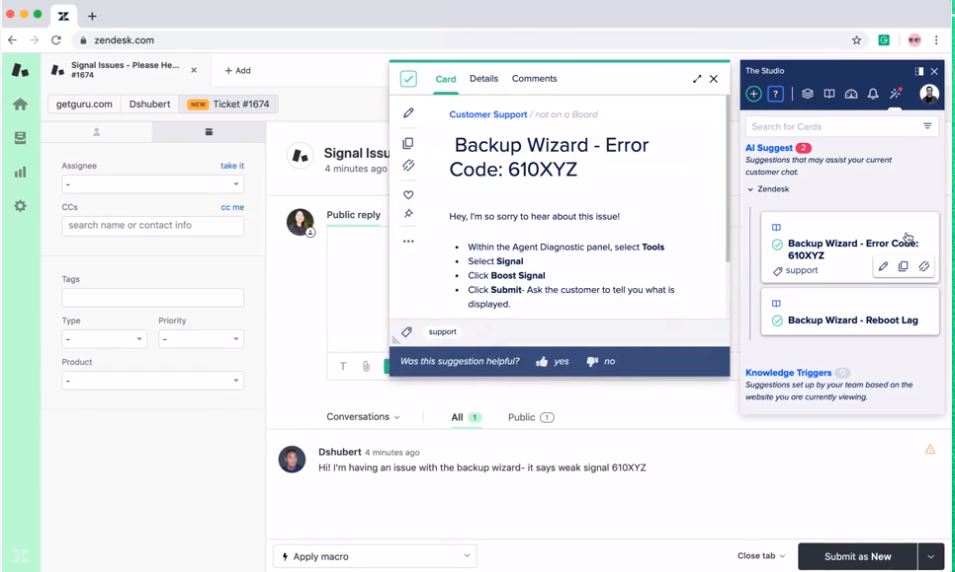
Guru
"All the answers are in Guru. Please look it up in Guru and ask a friend before asking me."
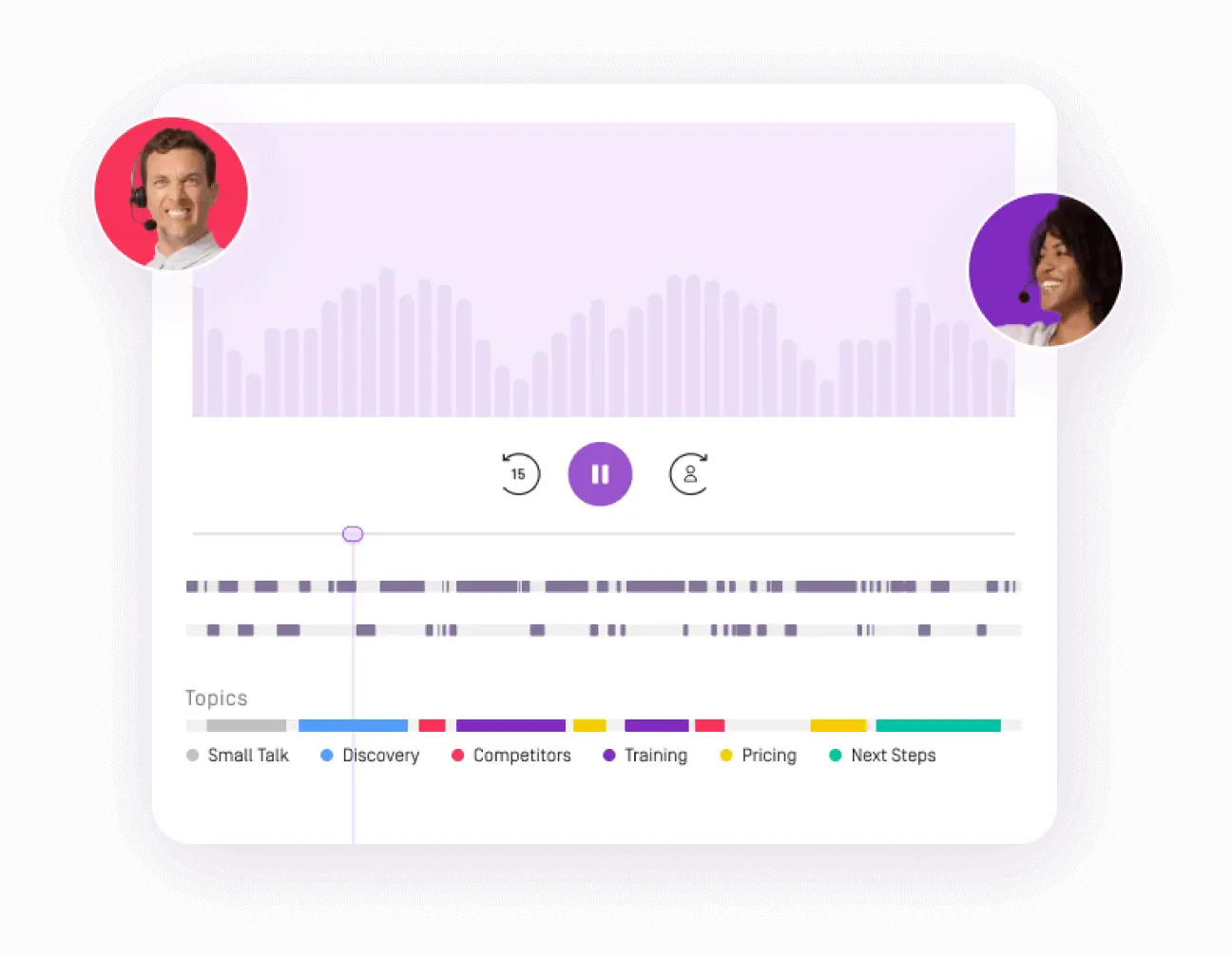
Gong
Did my demo run? How'd the meeting go? Watch the Gong.
Projection Central
AKA the best damn forecasting tool in the world. Shoutout Projection Central aka P-Cent, a spreadsheet we made utilizing the magic of G-Connect, Z-scores, and Love.
Cleanshot
For making GIFs.
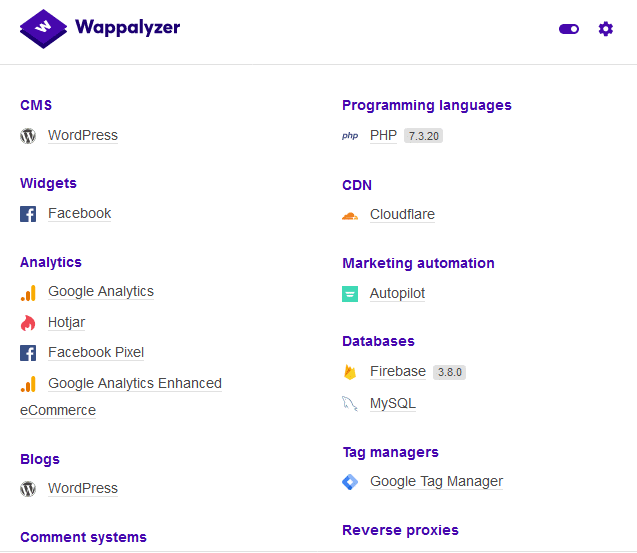
Wappalyzer
To determine tools a prospect uses on their website. So far most accurate when it comes to our prospects tech stack.
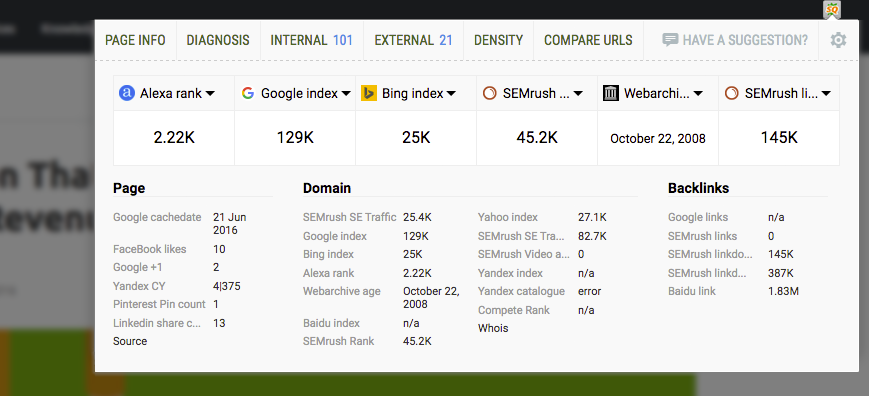
SEOQuake
To determine our prospects' web traffic.
4. We like each other
We collaborate super closely across our entire company — including partnerships, marketing, AEs, and between reps and managers.
Partnerships
By working with our Partnerships team, we've created specific cadences we send to customers of our partners, highlighting how Chili Piper works with their current tech stack to advance their Inbound Conversion process.
These have proven to be extremely successful, converting over 2X from Account Worked→Opportunity Created compared to our typical outreach.
Marketing
Across SaaS, SDR teams are moving more to sit under marketing instead of sales. While our SDR team is firmly part of the Sales Org, we work closely with our marketing team to ensure we're not missing opportunities.
Our marketing and sales leadership teams have weekly meetings to discuss what messaging is working in our ads and cadences, and we find creative ways to convert marketing engagement into Sales Opportunities. We focus on the outcome first and attribution second.
AE team
As I mentioned, our SDRs are firmly part of our SDR org. Like our AE team, we comp them on a percentage of closed-won dollars they source (in addition to commission for Opportunities Created alone). As such, we have a two-way feedback loop between our SDRs and AEs.
Along with a leadership team who values our reps' input, we make sure we're continuing to improve our joint processes and working toward one goal.
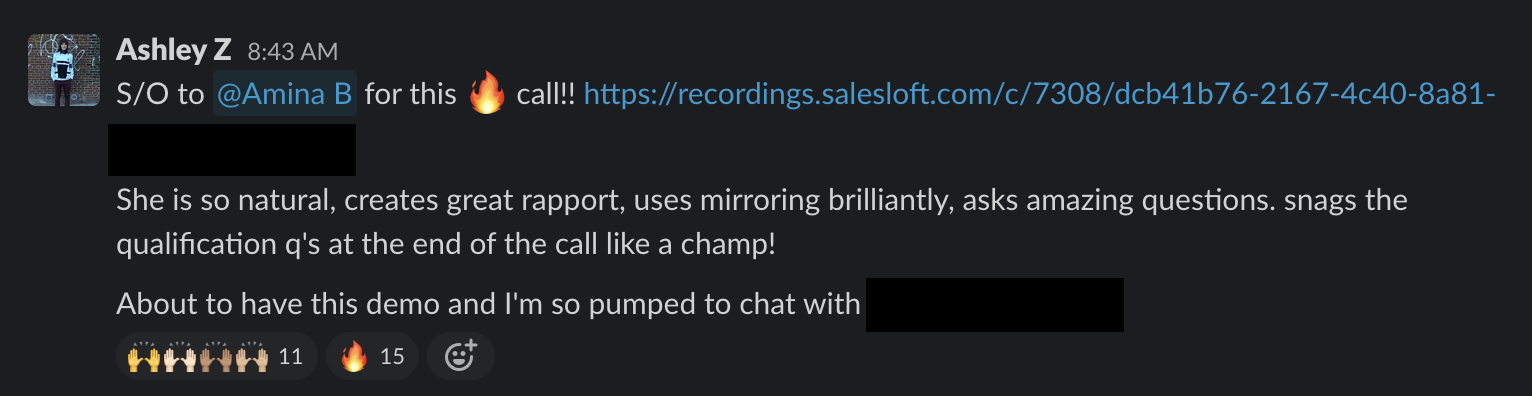
SDRs and leadership
One of the most important feedback loops is that between our SDRs and our SDR Leadership. In order for SDRs to focus on what they can control, they have to trust that the roadblocks they can't control are being actively addressed by leadership (like fixing bugs in tools, improving our cadence messaging with data, etc.).
Most of our Monday training come from feedback our SDRs provide on what they need support with. Additionally, each new top performer on our team brings their own spin to the role and new best practices we can take away. While our leadership team allocates time and resources to scaling these takeaways, our reps take on leadership roles as well when they see something working.
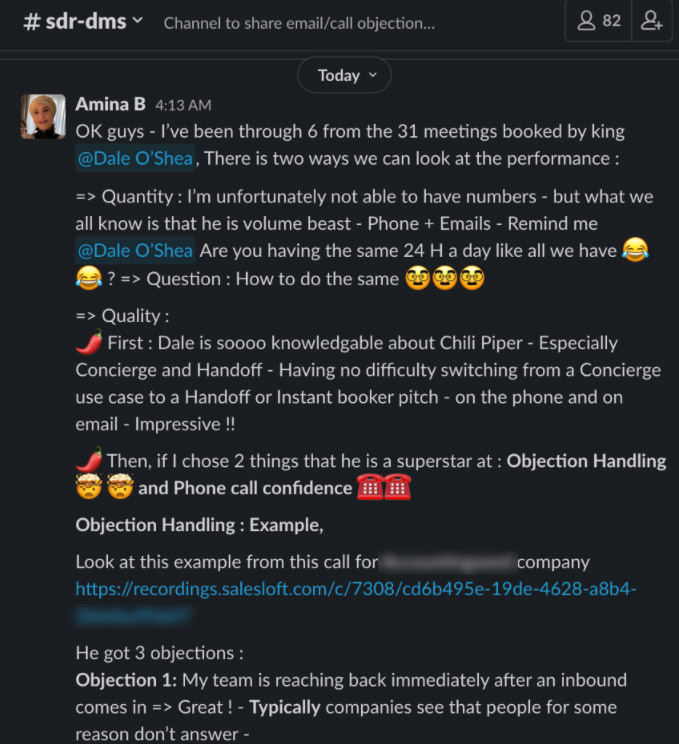
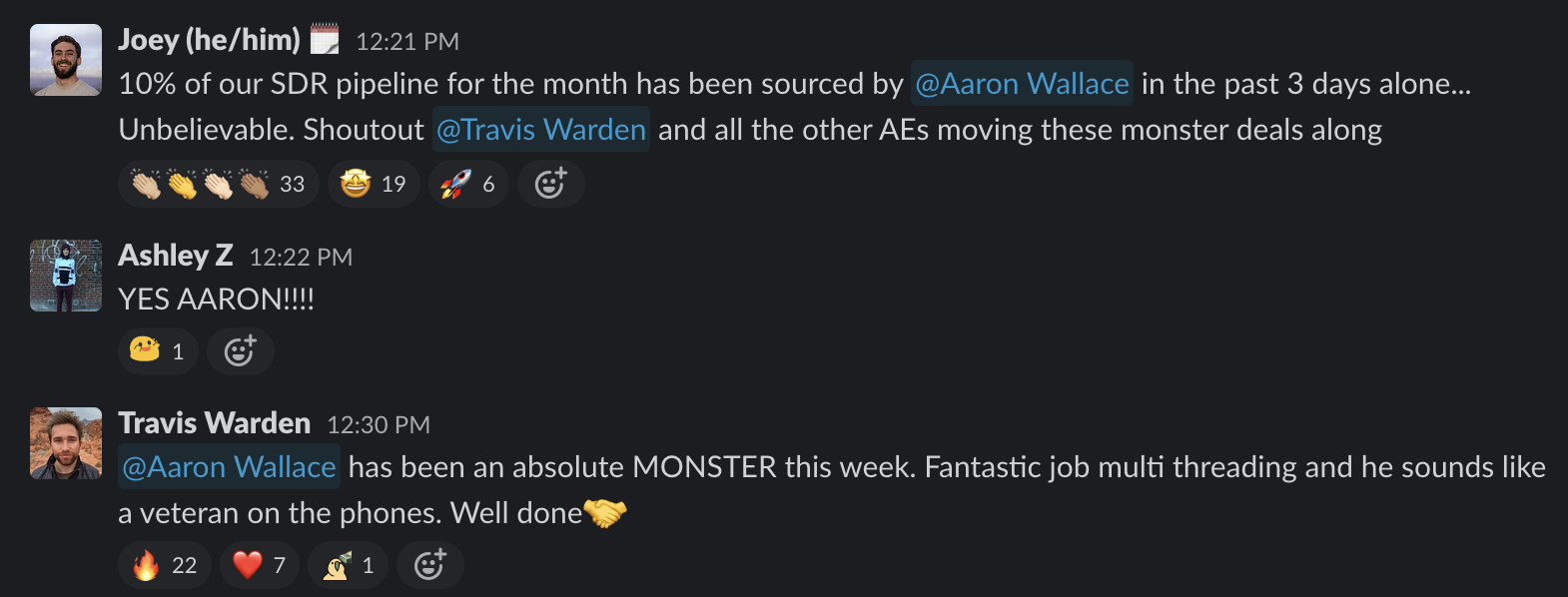
In the example above, you can see one of our previous high performing SDRs, Amina, sharing her own takeaways from the success of a (then) new rep, Dale. This is a shining example of how our reps do their own research into what's working and push our leadership team to spread what's working across the team.
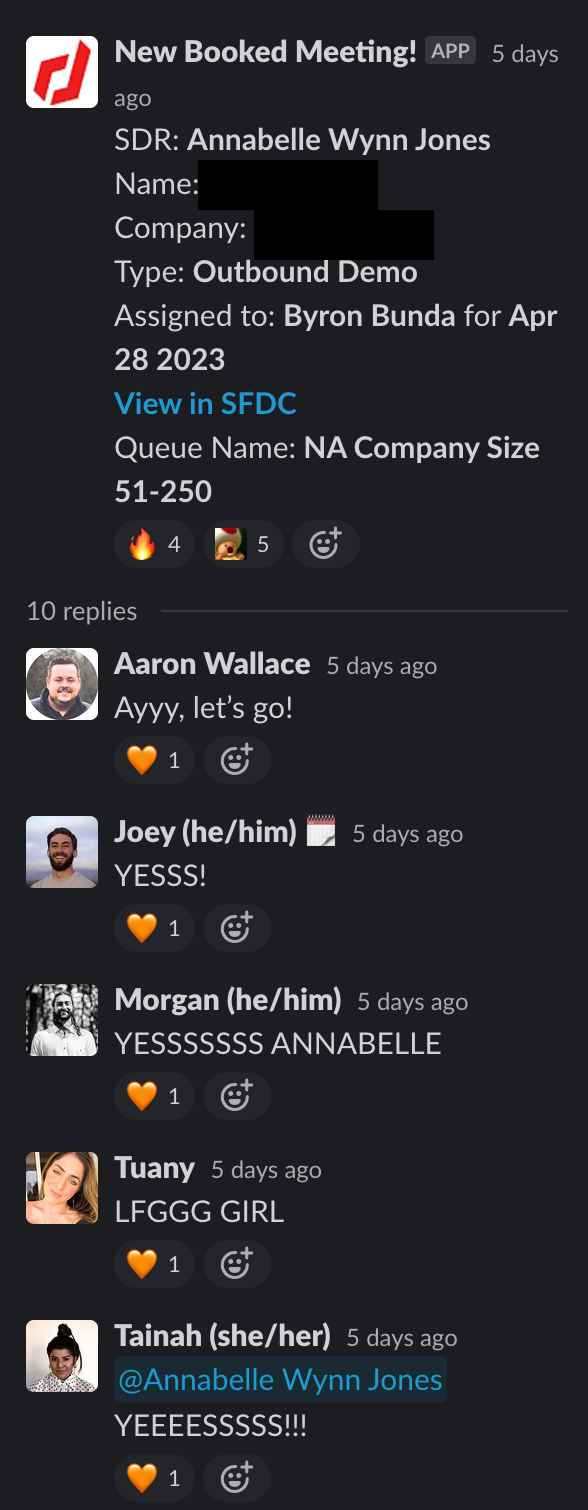
Every meeting booked by our team is met with enthusiastic celebration from the rest of the team. Each meeting is an opportunity to learn — as well as an opportunity to lift up your teammates.
Wrapping up
At Chili Piper, we keep experimenting until something works. Then, we tell the world about it.
If you want to hear about the other things we're doing in marketing and sales, follow along on LinkedIn — or subscribe to The Sauce, the spiciest newsletter in B2B.