Why Tara Robertson from Bitly got promoted from CMO to Chief Commercial Officer

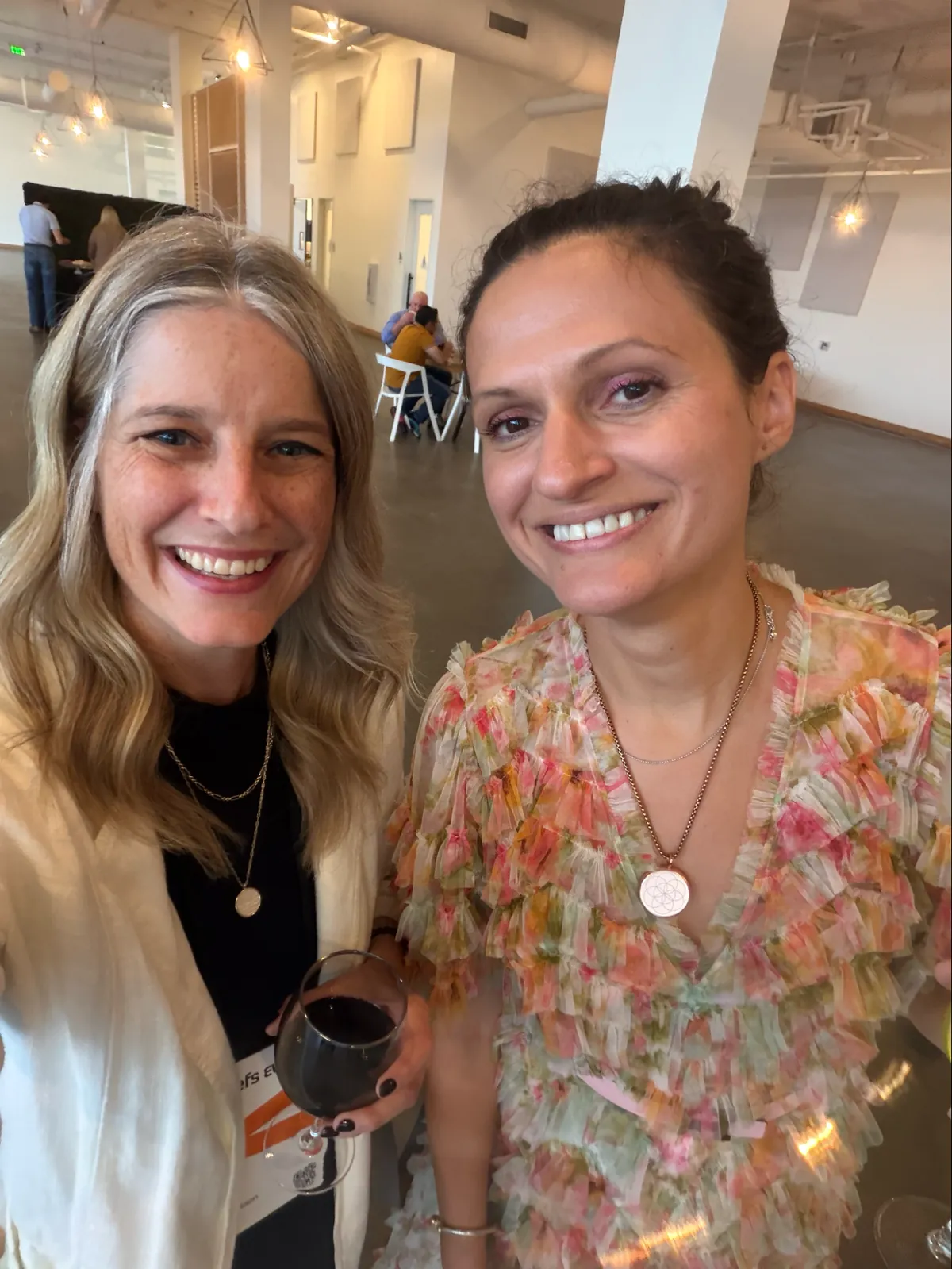
I met Tara Robertson this week at Ahrefs Evolve in San Diego.
Her badge said Bitly. Chief Commercial Officer. But not long ago, that badge would have said CMO.
Most people who have followed her on socials or seen her presentations might think she got promoted because of her numbers. The numbers are great. I'll walk you through them below.
But I think that's just the outcome, because what truly matters is what precedes the numbers.
The numbers first
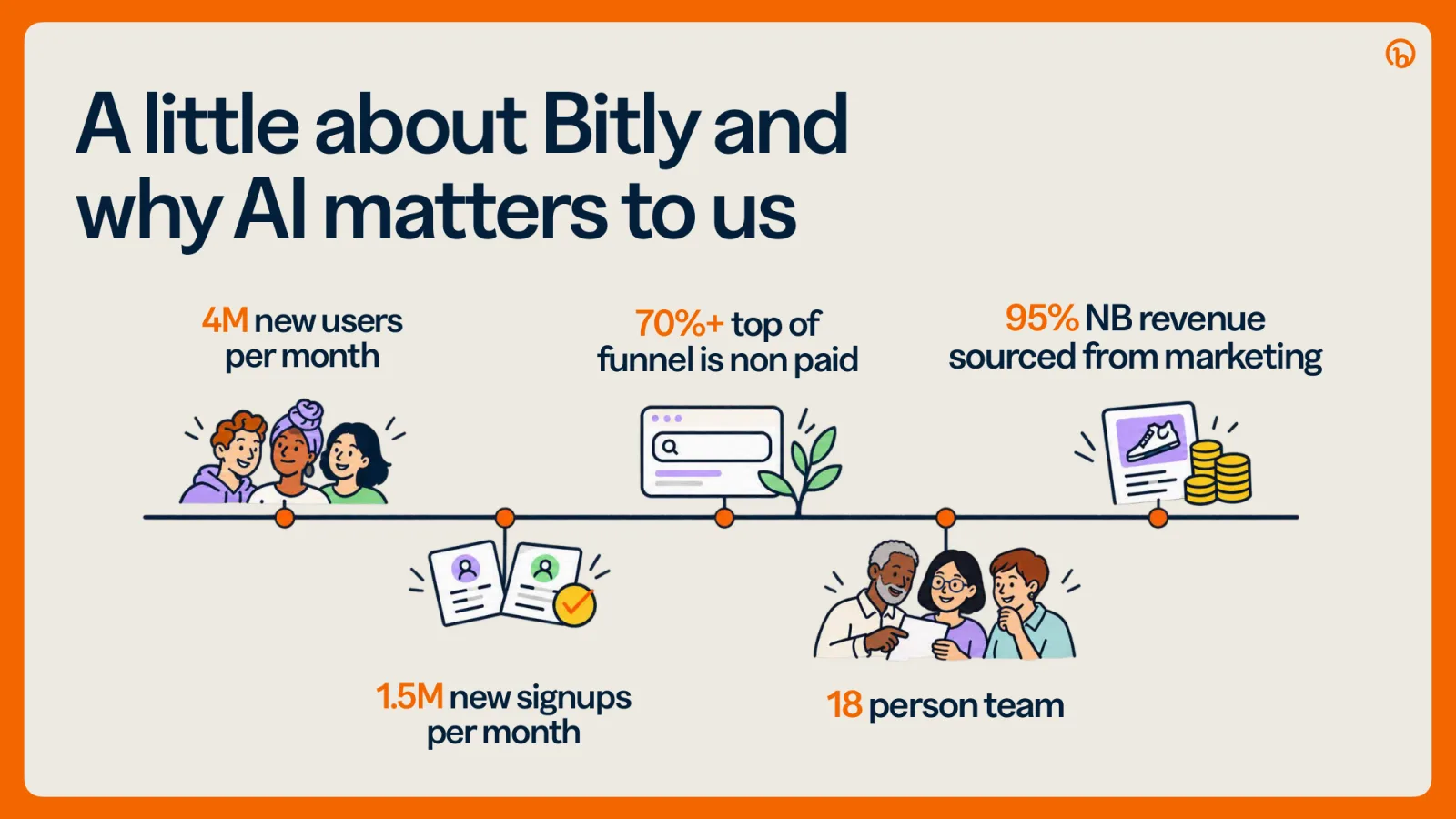
Bitly is an efficient marketing PLG machine in a company with roughly 150M in ARR. Tara's marketing team runs it with 18 people driving around:
- 4M new users a month
- 1.5M new signups a month
- 70%+ of the top of the funnel is non-paid
- 95% of new business revenue is sourced from marketing
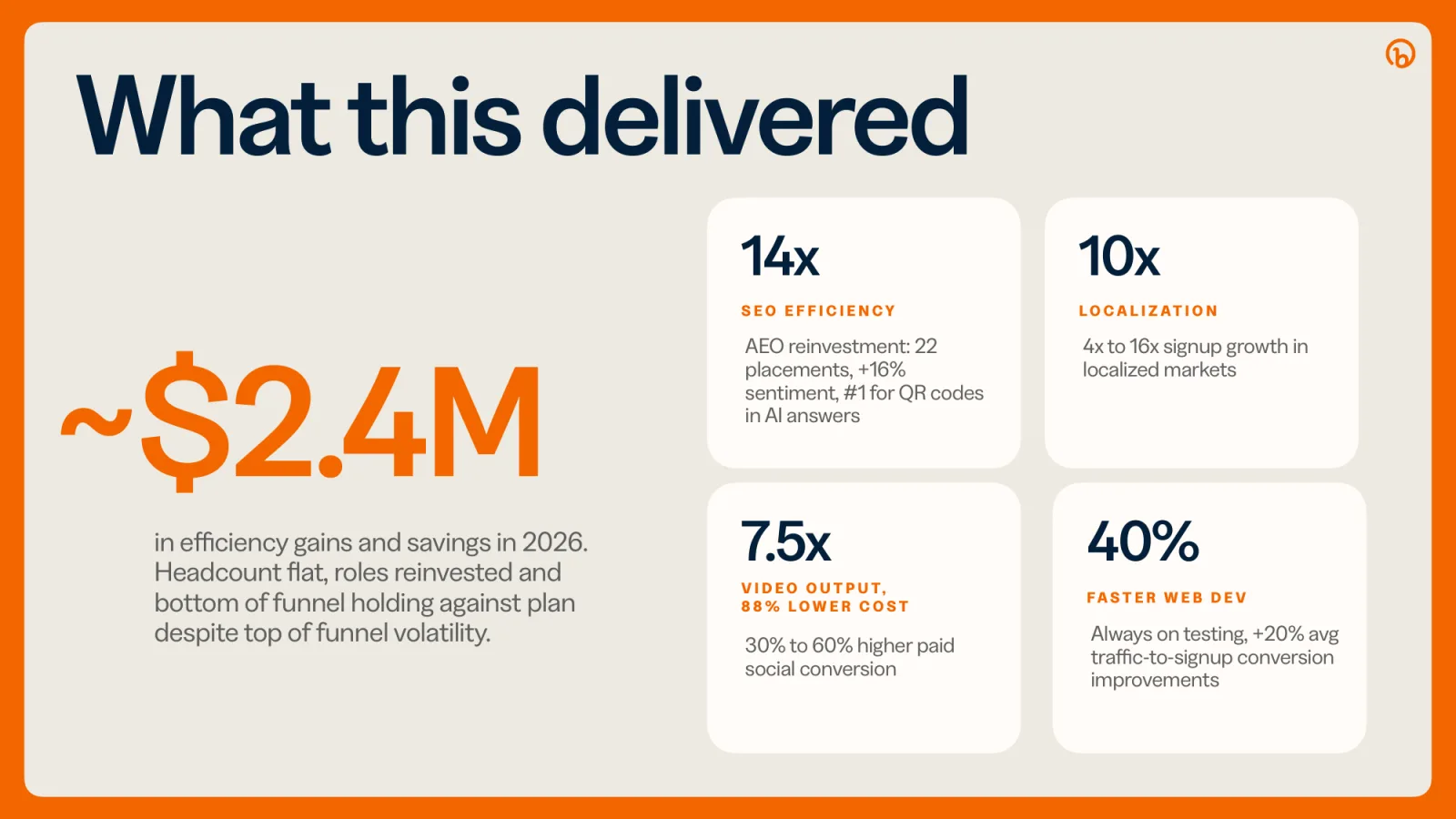
Then they went AI-first. Here's what is estimated to come out of it in 2026:
- ~$2.4M in efficiency gains and savings, with headcount flat
- 14x SEO production
- 10x localization, with 4x to 16x signup growth in new localized markets
- 7.5x video output at 88% lower cost
- 40% faster web development
And the more data that shows she's very intentional about everything: they lost 26% of their traffic, and demand at the bottom of the funnel has held steady anyway, because the team has worked hard to optimize for the right numbers.
2026 is the year every marketer is scared of traffic drops because buyers ask ChatGPT or Claude instead of Google. Tara's team lived it and kept the pipeline, which is impressive.
Keeping an eye on what truly matters is only half of it. Tara is the first to say you also have to communicate those learnings to leadership and everyone around you. Below is an example of the board level data (fake numbers) that Tara, in partnership with her VP Acquisition, has been presenting the last couple of years to help leadership understand the journey they are on as acquisition changes.
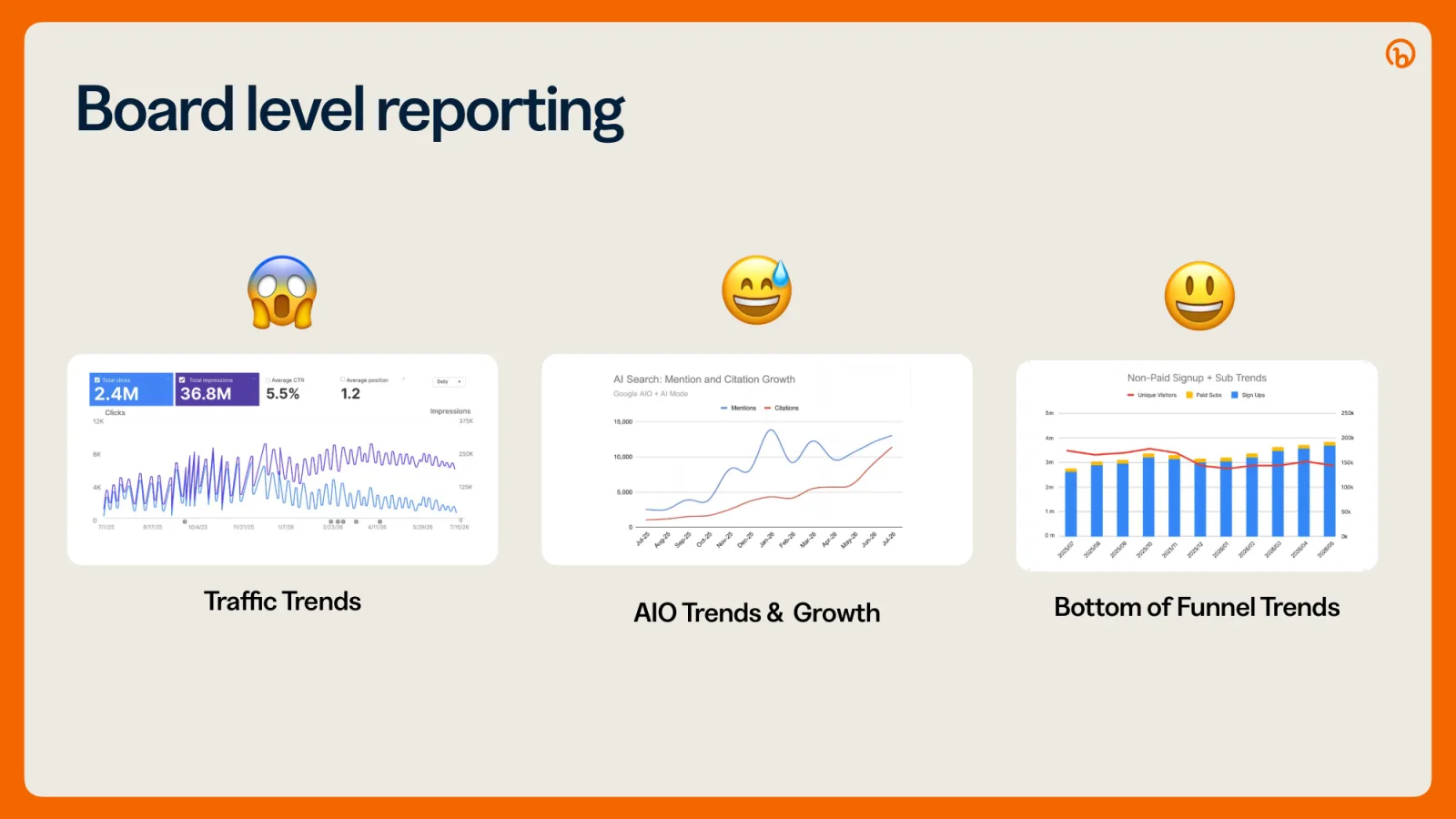
The goal is to bring people along: what's happening, why it's happening, and what to expect around the corner. The team started reporting on the gap between impressions and clicks before it even showed up, so the story connected and was never a surprise. AKA, if traffic goes down, are we seeing AI citations and mentions go up? And most important, is the bottom of the funnel and revenue holding steady? As Tara mentioned in her talk, new metrics need a new story. And when you tell it early and often, people are able to follow along.
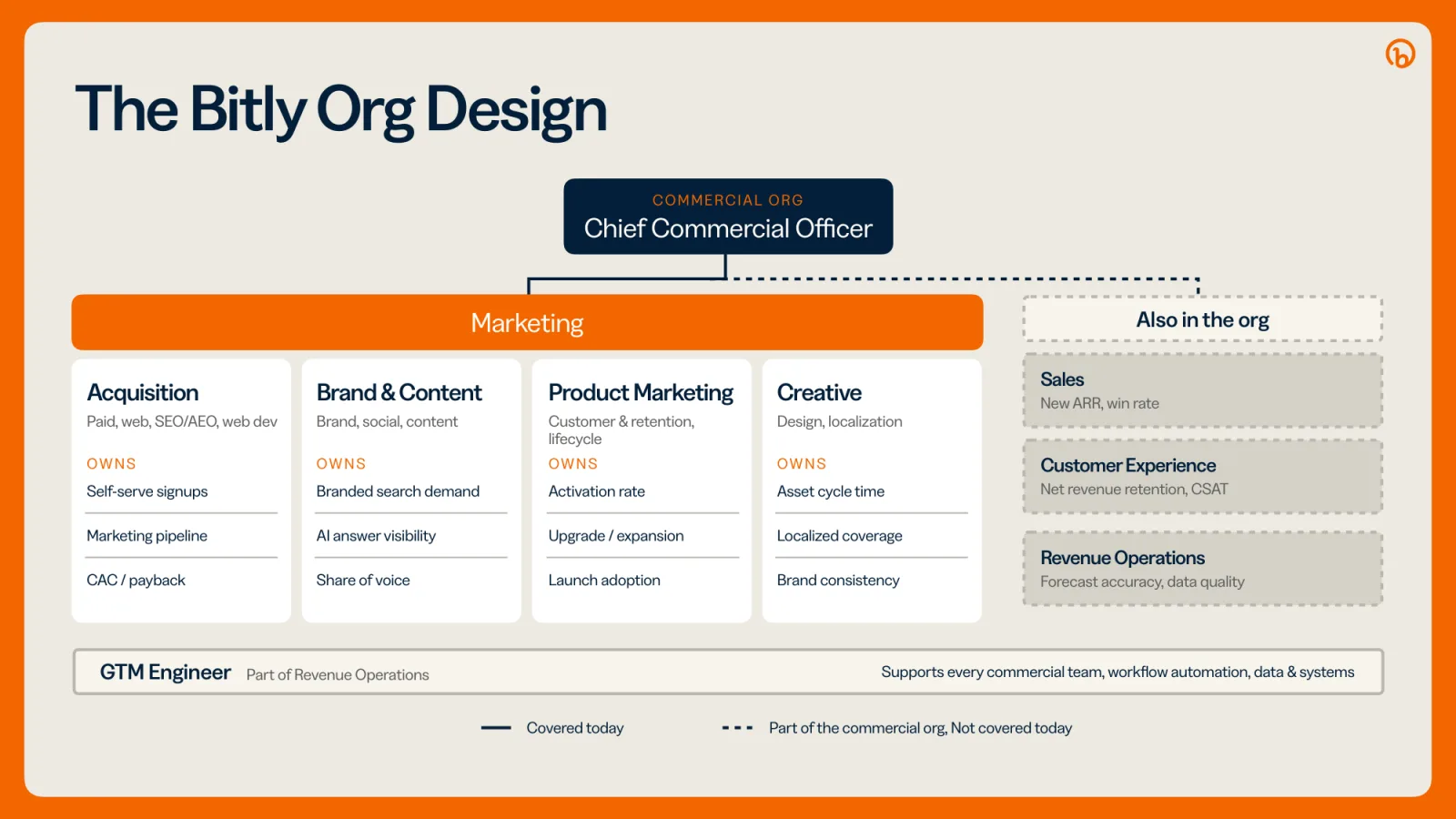
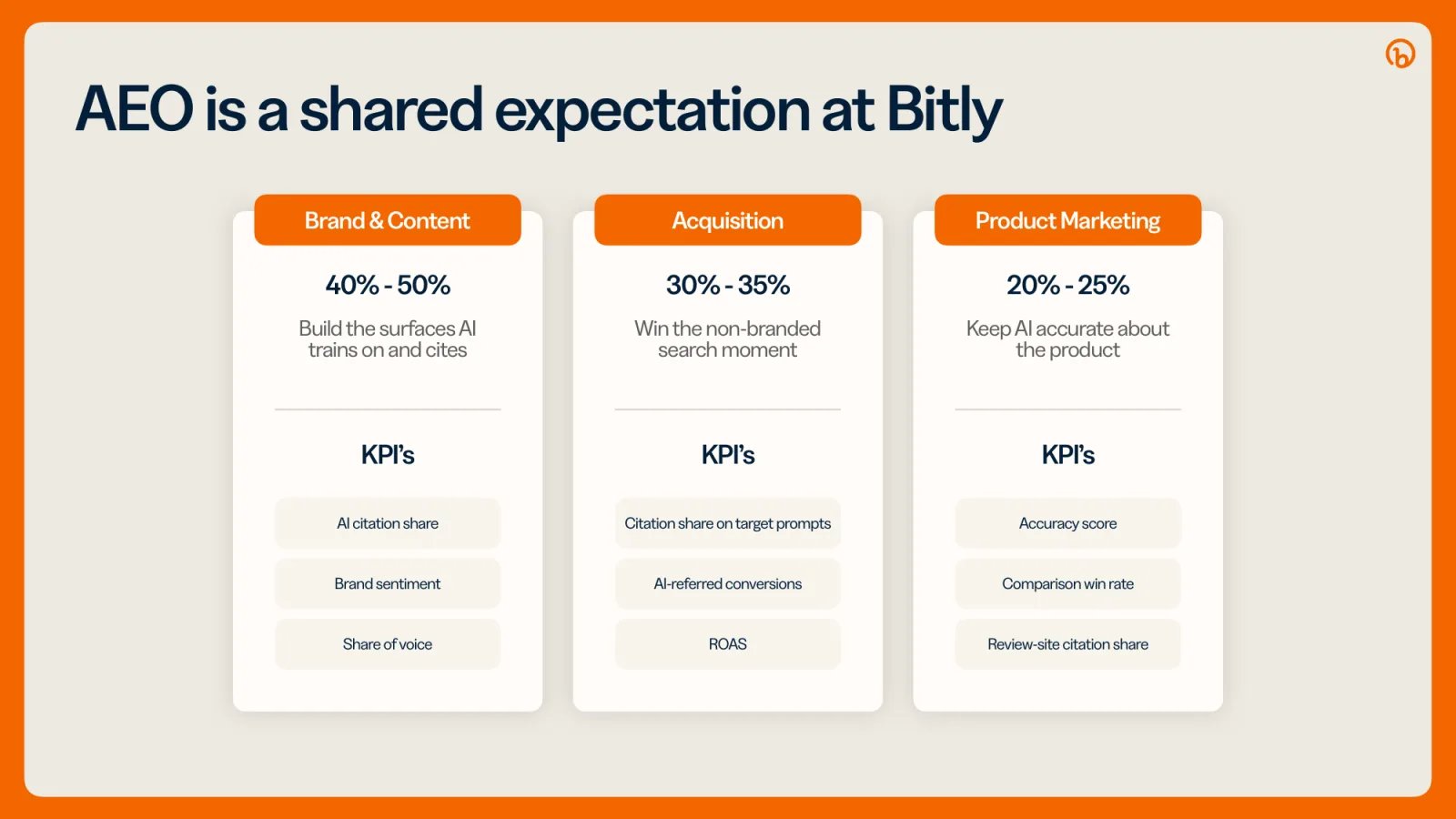
To continue down this path, Tara made sure her entire org structure matched the new realities of the market to focus on the right metrics (inclusive of the GTM engineer that everyone dreams of having in their team these days, and shifting AEO to become distributed across the entire marketing function with new KPIs).
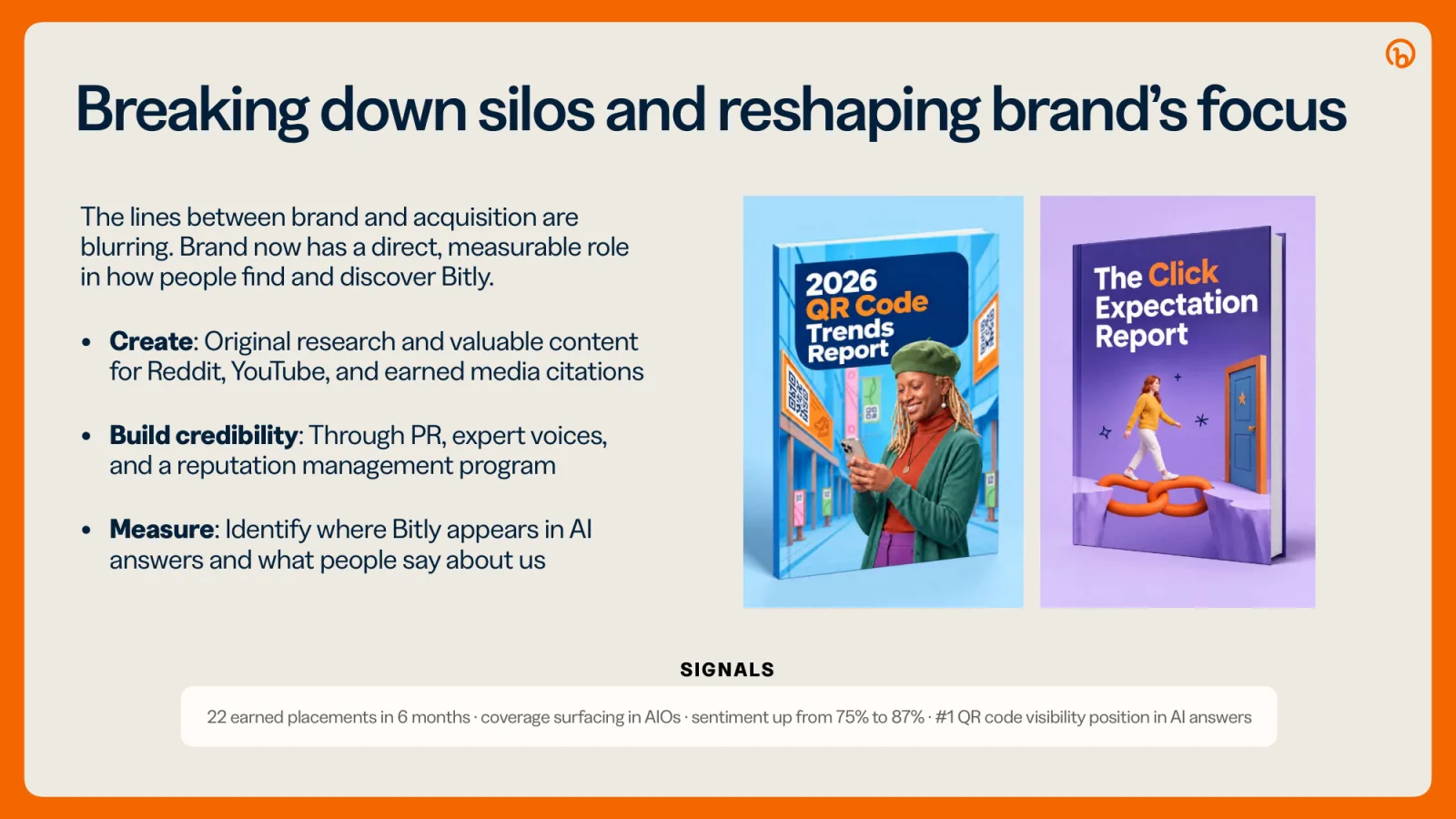
They also became #1 for QR codes in AI answers along with links, with nearly twice the citation share of their closest competitor, through the investment in new channels like Reddit and YouTube and strategies that matter with AI search.
Here's one example of what "7.5x video output" looks like in practice:
So why the promotion?
Obviously, by looking at the numbers above, you can see that Tara has the skills to make the machine work.
But I believe more than anything that Tara got to these results because of her attitude on top of those skills.
Because Tara is VERY curious. And her enthusiasm is contagious. You can just feel it when you talk to her. You can see it on stage when she speaks.
In addition to the fact that she finds joy in the work, she has also learned to ask for help.
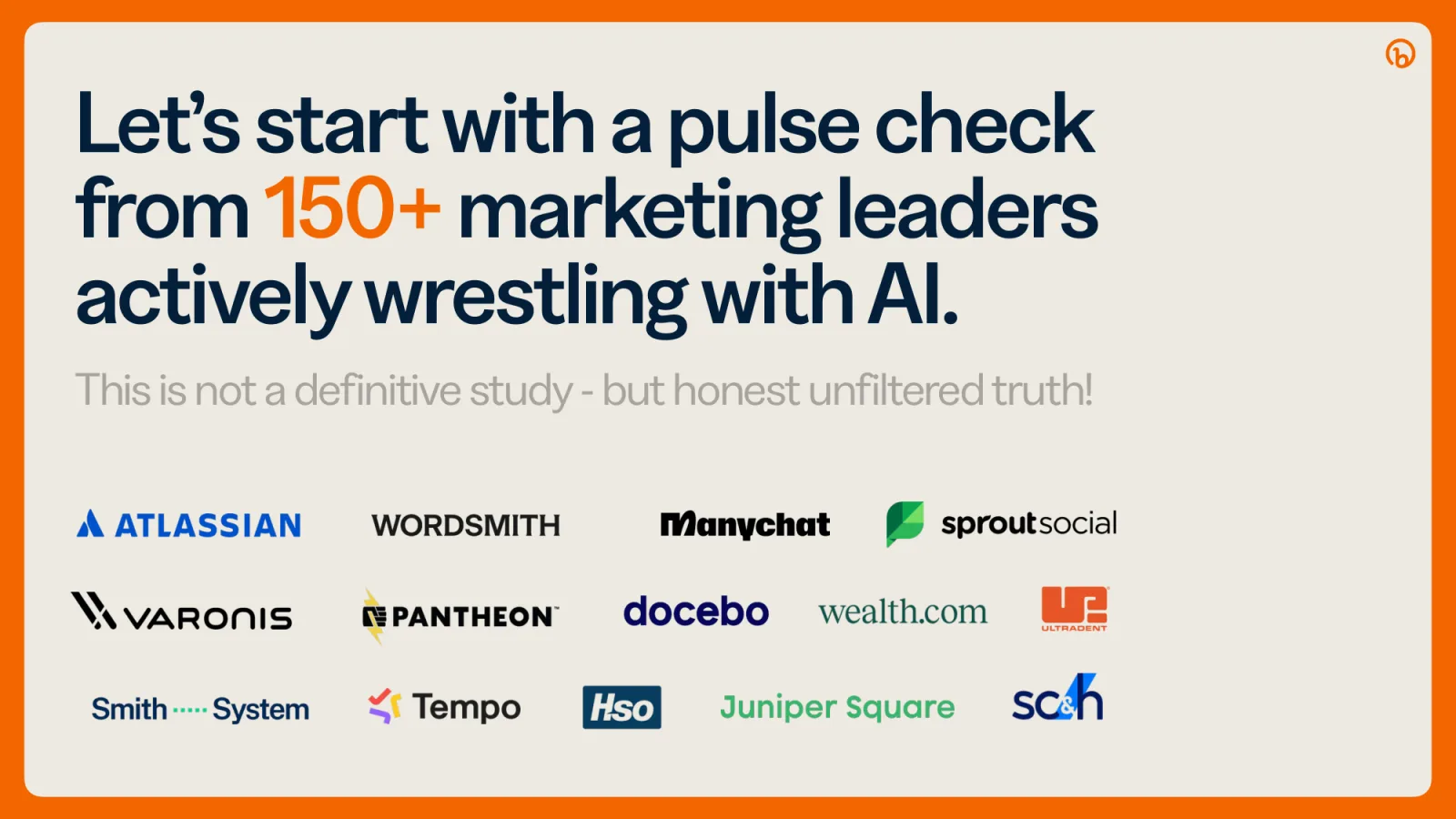
She, much like the rest of us, didn't know how to build an AI first org. So she personally interviewed and surveyed 150+ marketing leaders who are wrestling with AI right now and analyzed their honest, unfiltered answers to recognize trends. That's someone who wants to know how everyone else is figuring it out. This kind of candor and ability to ask others for help is rare.
She also cares deeply about her team understanding the urgency of becoming experts in everything related to #tokenmaxxing at work. Because she doesn't want them to be left behind.
I saw her interacting with her team at the conference and you can see her care for those around her is palpable. She checks if they've eaten, if they met the right people on the floor. She doesn't talk about it, she just does it.
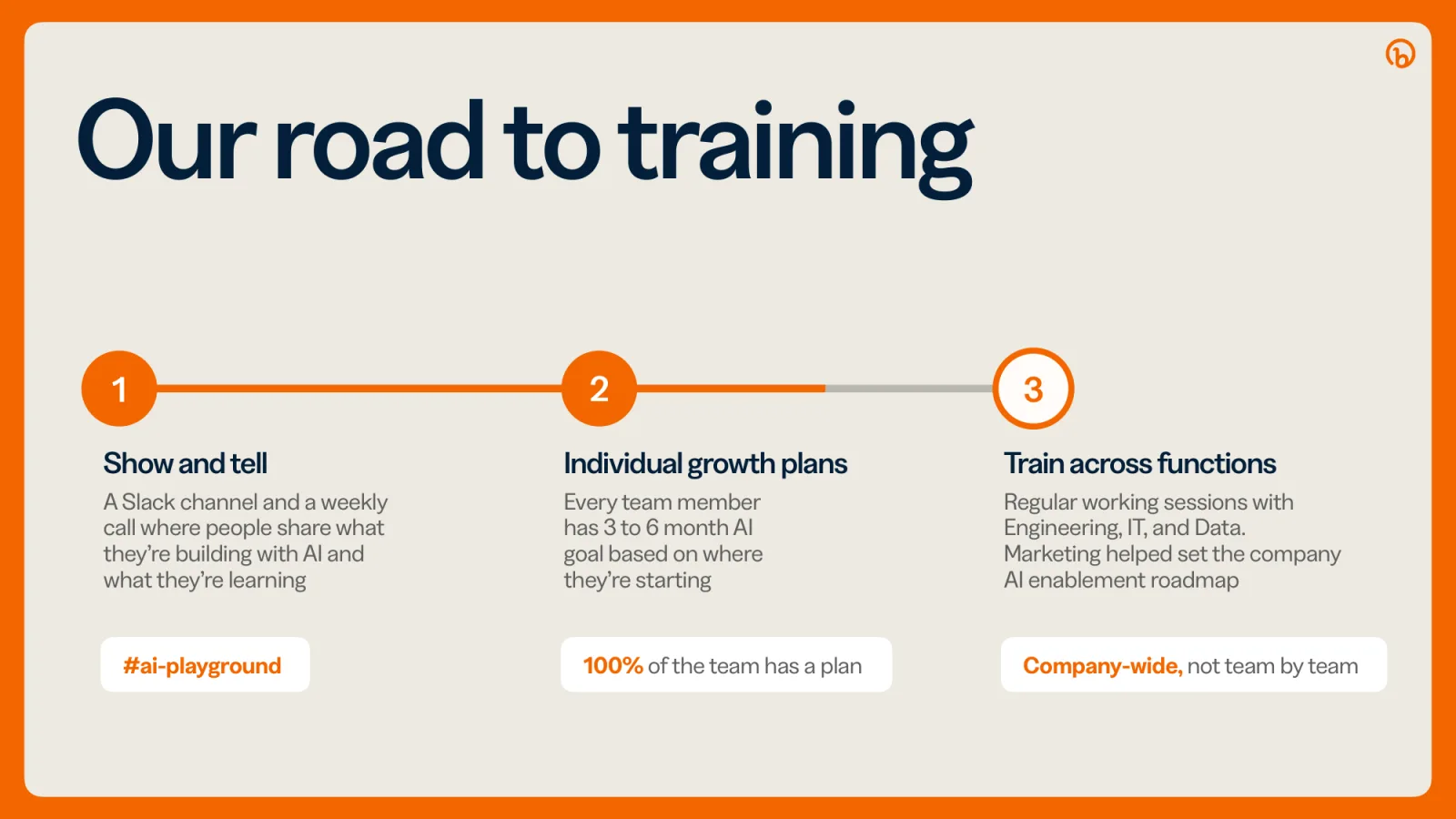
She started using all the tools before her team and creating a space for everyone to show and tell. That way she could show she's making mistakes and she's learning alongside the team.
You don't get that from a mandate. A mandate gets you logins. You get that from a leader who is visibly having fun with the work, every week, in front of the team.
This is the same thing I talked about
My own talk this year at Ahrefs was about one question: when we can automate ourselves with AI, what is left of us?
My answer came from our own team. We went from 22 marketers to 2. We were drowning. Then we handed the doing to the agents, and something I didn't expect happened. People stopped doing and started creating.
Creativity can only come from play. And play is different for every person.
For one person on our team, play was the writing. For another, it was finding the cheapest possible agent. For another, it was teaching everyone else to build trust. For me, it's figuring out the architecture of the new GTM machine that has humans and AI agents working together to get pipeline results.
Look at what Tara built:
- #ai-playground: a Slack channel and a weekly call where people show what they're building with AI and any new trends, training, or articles worth checking out
- An individual growth plan for every single person: a 3 to 6 month AI goal based on where they are starting, not a one-size-fits-all course, built in partnership and not top down
- New roles grown from inside: 3+ new AI-first roles in marketing alone, filled by training and recruiting from inside the team based on readiness and results
That's play for her, designed on purpose. She made room for each person to find their own version of it.
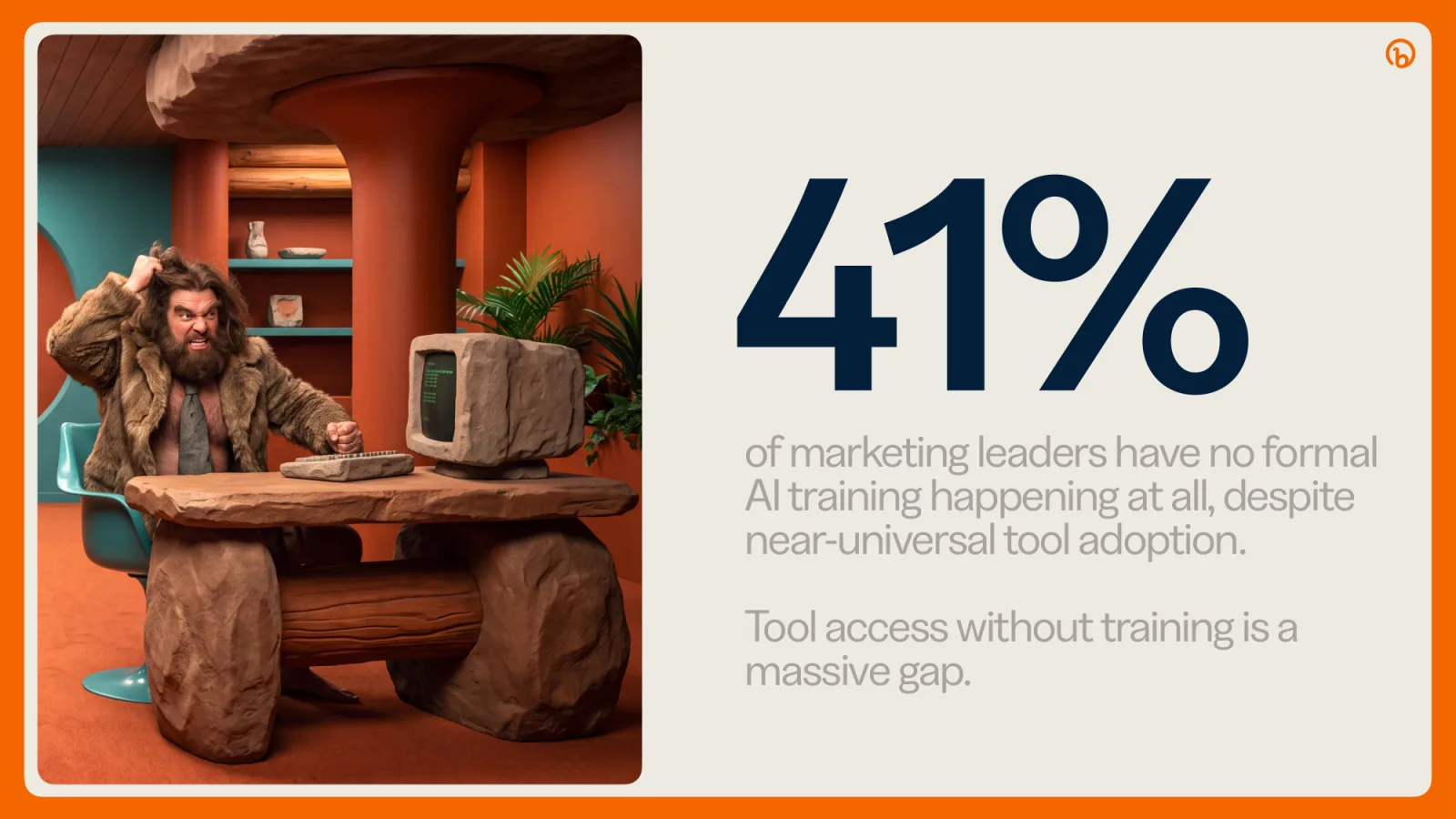
And the study she did with other marketing leaders shows how rare that is: 41% of marketing leaders have no formal AI training at all, even though tool adoption is near 100%. Most teams got a subscription and a "go build." Tara's team got a fun playground to experiment.
Why that earns you the whole commercial org
Here's the part I find most interesting as a CEO, and the reason I'm writing this blog post.
When your CMO redesigns how the work gets done, not just what gets shipped, she stops being a department head. She becomes an ARCHITECT.
Look at the org she runs now again.
Marketing, Sales, Customer Experience, and Revenue Operations. With a GTM Engineer inside RevOps who builds the systems, dashboards, and agent workflows for every commercial team. Not separate.
I said it in my own talk this week as well: every C-level role is turning into this. Architects. Of agents, and of humans together.
Tara is what that looks like with a real title attached to it.
The CEO didn't give her sales and CX because she hit the numbers. Many other CMOs hit numbers. She got it because she had already shown she could rebuild a team around AI, keep people joyful through the messy middle, and keep the pipeline steady while traffic fell.
That's the person you want running the whole engine.
What is worth stealing from Tara
If you're a marketing leader, here's what I'd take home from her talk:
- Start your own "How I AI" show and tell. Allow people to fail and make mistakes. Be candid about it.
- Rewrite the job descriptions you already have. Around what AI now handles and what the person owns.
- Make AEO everyone's job. At Bitly it's split across Brand and Content, Acquisition, and Product Marketing, each with their own KPIs.
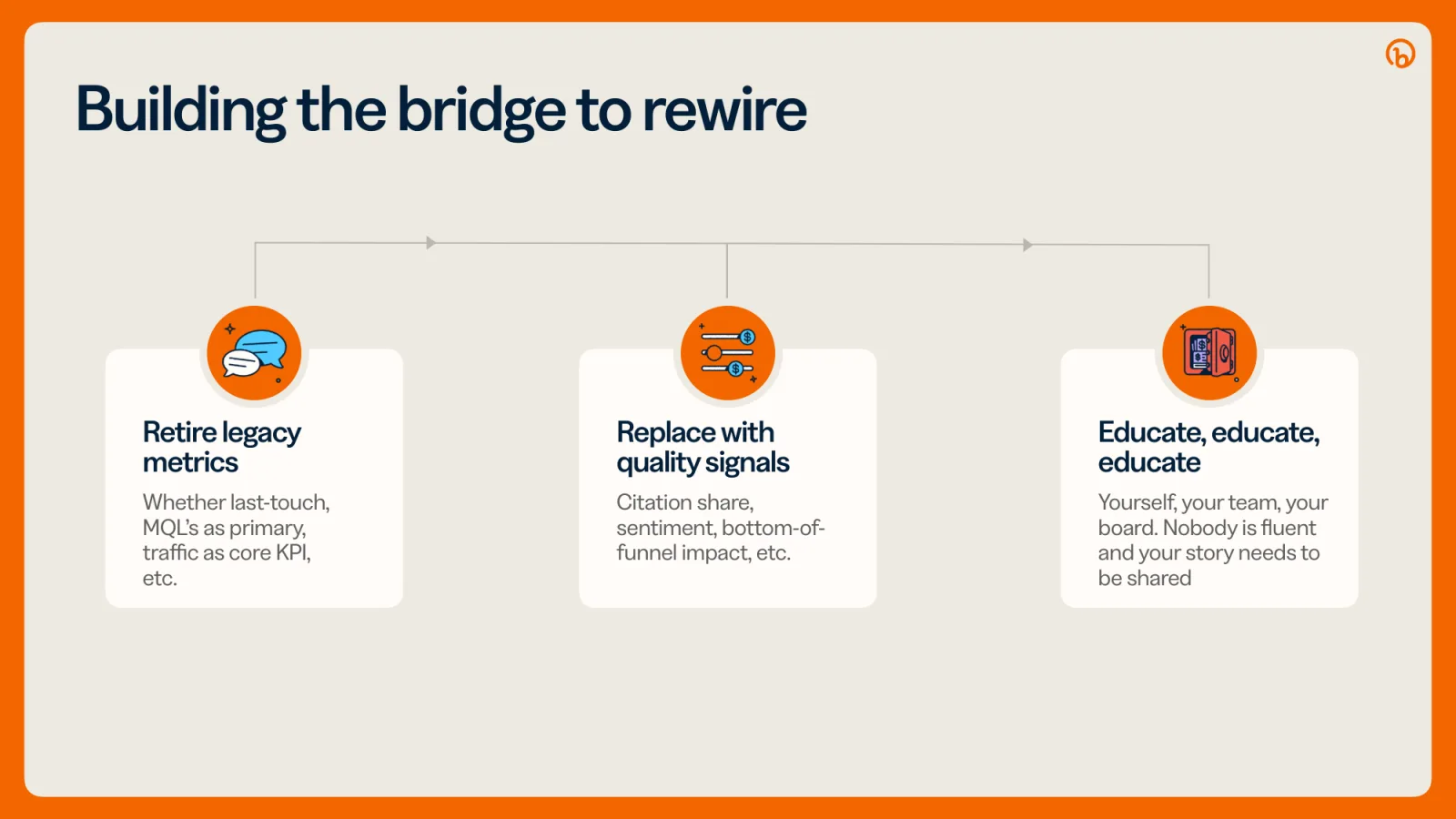
- Retire the old metrics out loud. Last-touch, MQLs as the primary number, traffic as a core KPI. Replace them with citation share, sentiment, and bottom-of-funnel impact. Then educate your team and your board on the new story.
As far as I see it, titles just follow the energy that's already there.
The marketers who will run whole companies in the next few years won't be the ones who know the most about AI and #tokenmaxxing. They'll be the ones who are the most curious about it, and who make it feel like play for everyone around them.
Tara, it was a pleasure to meet and I'll be cheering you on. You made a lot of people in that room this week feel a little less alone.