Full Funnel 4ever: 5 Ways to Use Distro from Pre- to Post-Sales
You know lead routing software is good at… well, routing leads. But there's a lot more to lead routing software than lead routing.
So we put on a webinar where we shared all the ways Chili Piper is using our lead routing product (Distro) all the way across the funnel. Including….
- Distributing leads based on Triggers and Rules
- Assigning to Salesforce Campaign
- Lead to Account Conversion
- Request for Solutions Consultant
- New Customer Onboarding Assignment Flow
Watch the full recording here:
Or my summarized version (with beautiful screenshots) down below:
1. Distributing leads based on Triggers and Rules
This is the OG for lead distribution and covers a gazillion use cases:
- Distributing MQLs to your sales team
- Distributing leads based on lead score to your sales team
- Distributing webinar attendees/badge scans to your sales team
- Distributing free trials to your sales team
- Distributing [anything] to [any team]
You get it. You want to distribute something to your sales team? This is the workflow for you.
Scott kicks it off at timestamp 2:59 in the webinar, or you can read the step-by-step below:
So building a router in Distro is based on 3 building blocks:
- The Trigger: This is what "triggers" your routing rules to start firing and is based on when a Salesforce record is updated or created.
- The Routing Rule: These are the routing conditions that tell Distro how you want to route your lead (e.g. by company size, by industry, ownership, etc.)
- The Teams: You build these out based on your existing team structure (e.g. enterprise team, North America team, etc.)
First, you set up your trigger. In this case, the trigger is going to be any lead that comes in from events:
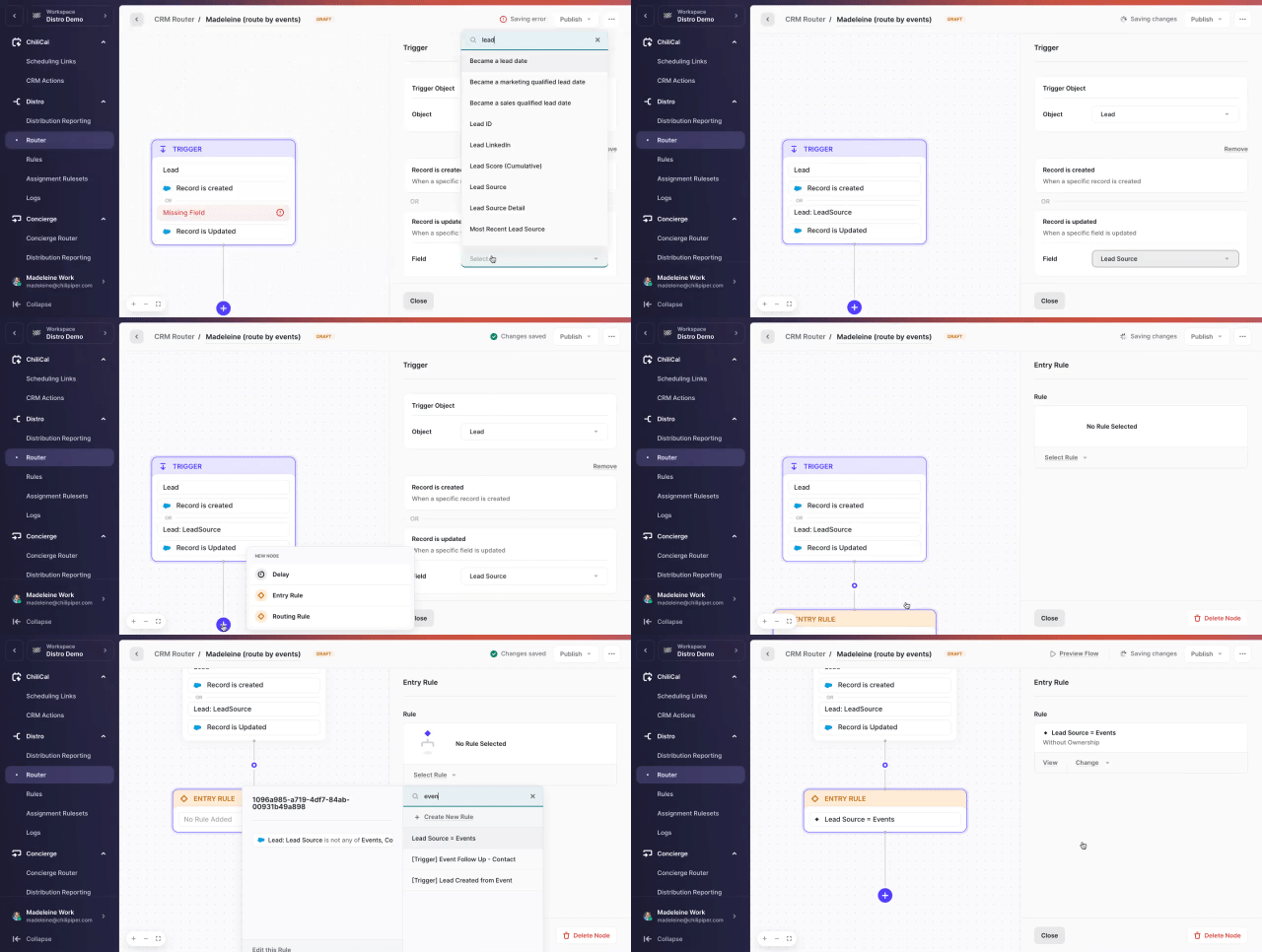
Then, you start building out your routing rules.
Let's start with account ownership:
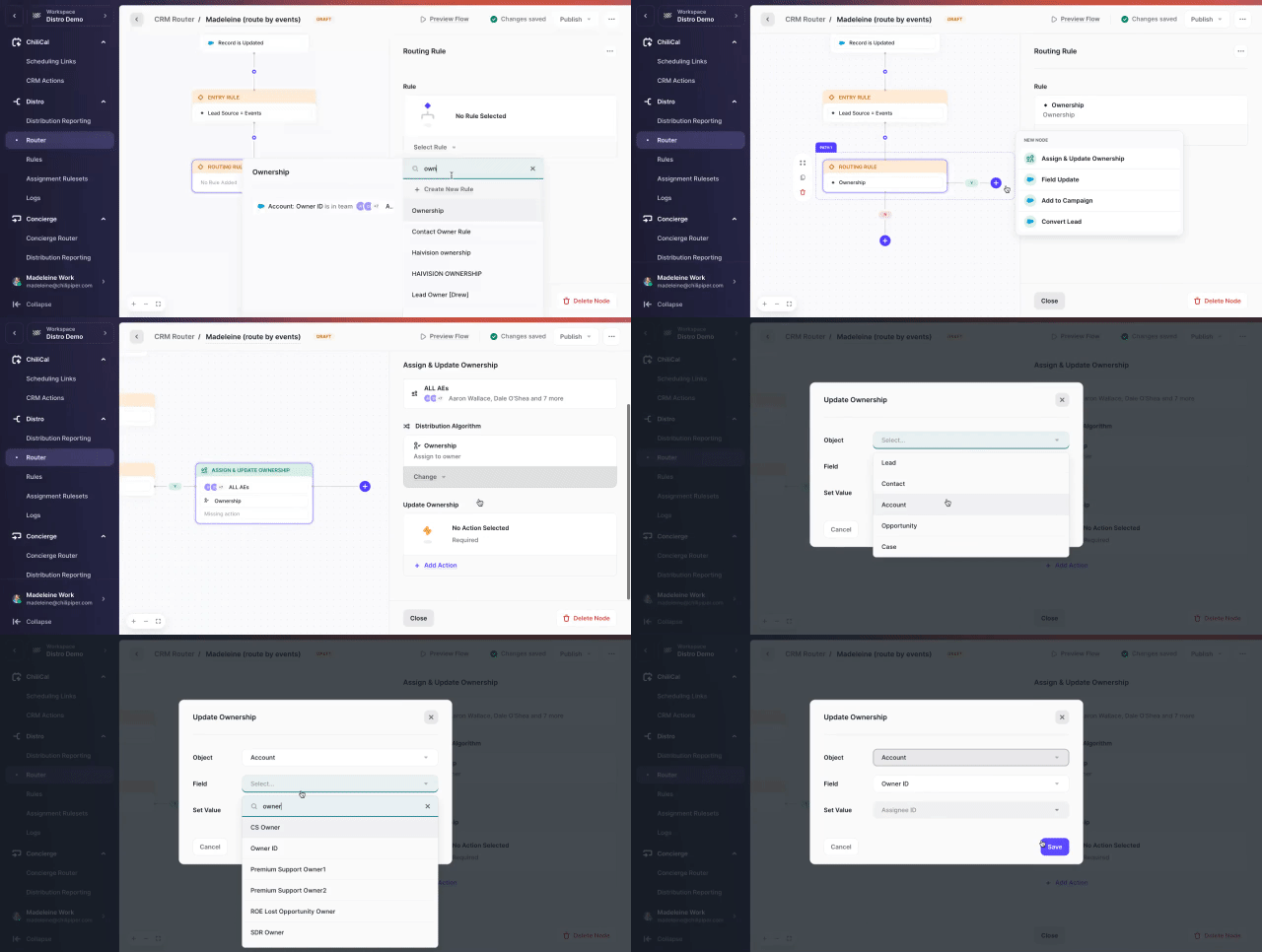
If there's no owner, the router will waterfall through all the rules. Let's set up a rule for our SMB team:
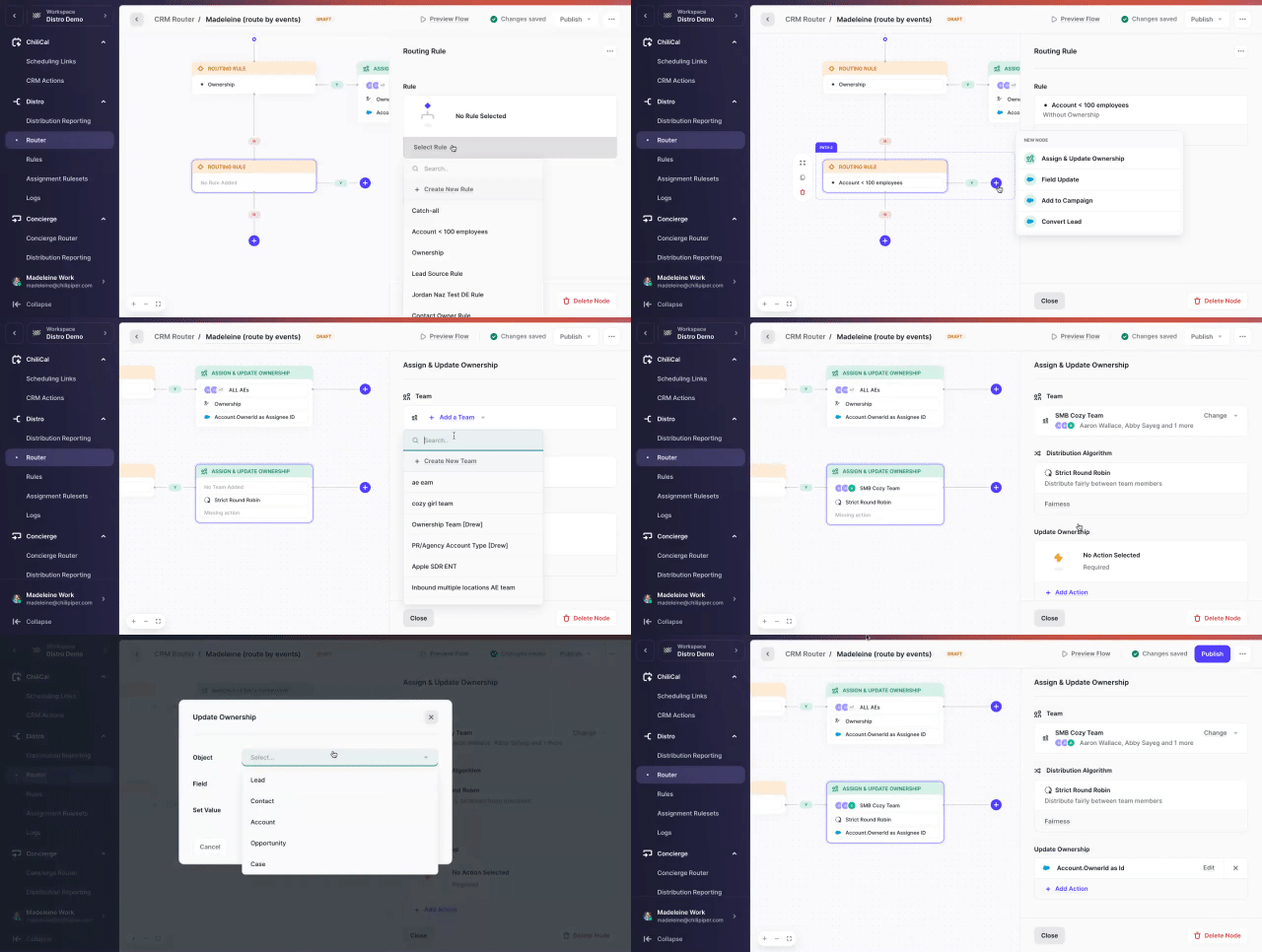
Then rinse and repeat until you get through all your different routing variations (e.g. route to MM team, enterprise team, etc. etc.)
When you've finished building everything out, click that "Preview Flow" button to make sure everything is on the up-and-up.
Simply find the Lead ID from an actual record in Salesforce, plug it in, and do some quick QA before pushing your router live.
Boom. Now you've created a lead distribution router, nice going.
The next thing we covered in the webinar was Assigning to Salesforce Campaign:
2. Assigning to Salesforce Campaign
For this, we used our same example of distributing leads from an event (starting at timestamp 11:11).
So your marketing team uploads a list of event leads into their marketing automation platform. The MAP pushes those leads into Salesforce. Distro assigns out those leads to the right team — and then can also assign them to a campaign in Salesforce.
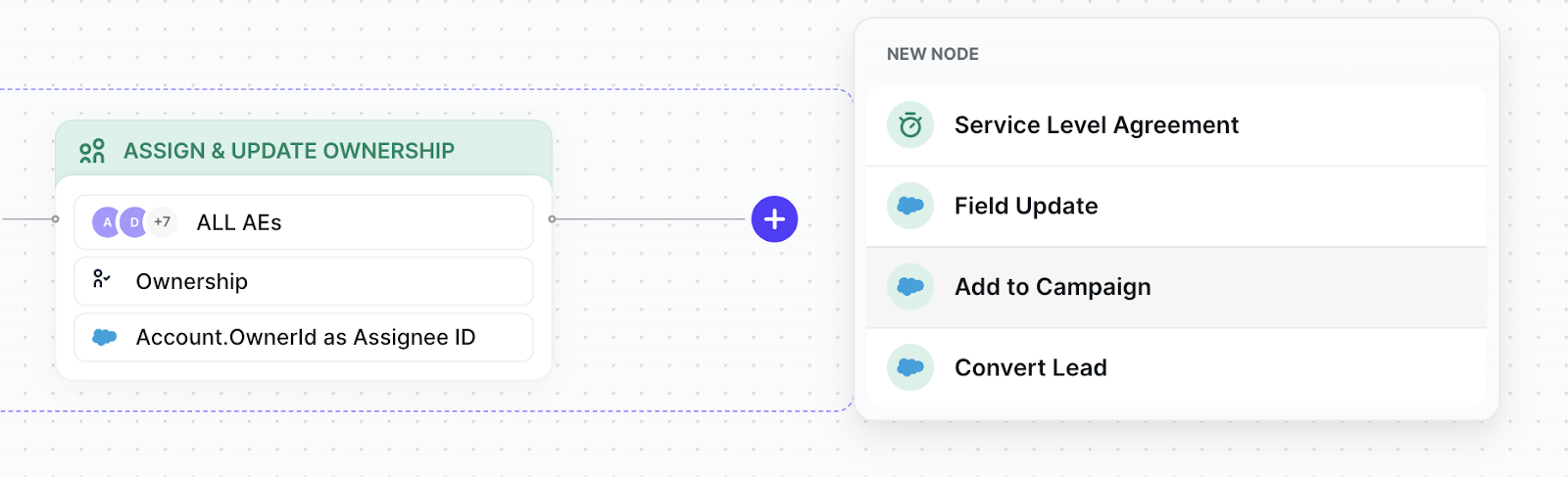
BAM, it's as easy as that.
3. Lead to Account Conversion
Lead-to-account conversion is a beautiful thing that makes our lives much easier. AKA less manual work and cleaner CRM data — what's not to love?
(Follow along in the webinar at timestamp 14:27.)
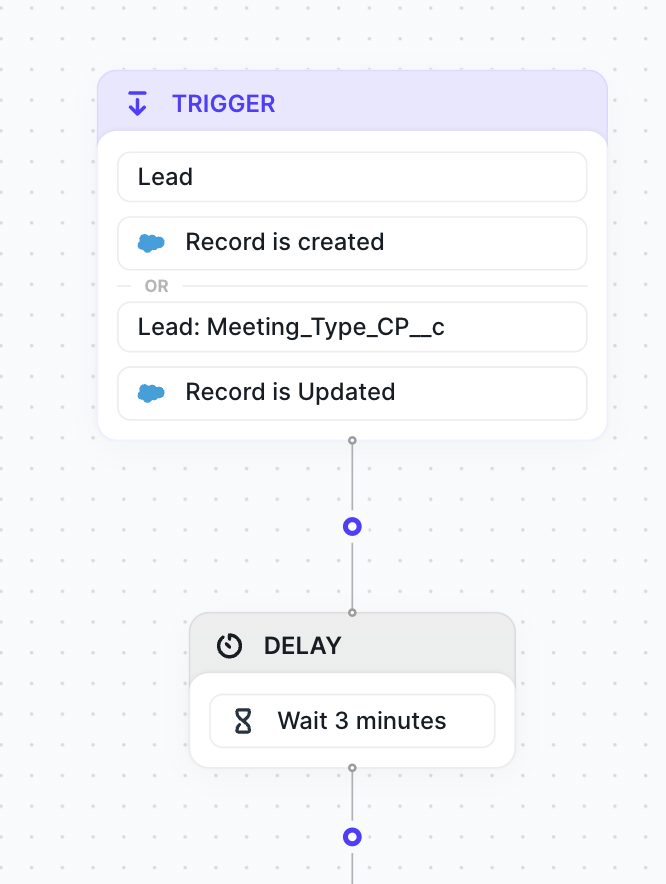
Here's an example of a flow we have set-up to automatically create an opportunity whenever a sales meeting is scheduled.
First, we set the trigger. And we add a 3-minute delay to give Clearbit time to enrich the data.
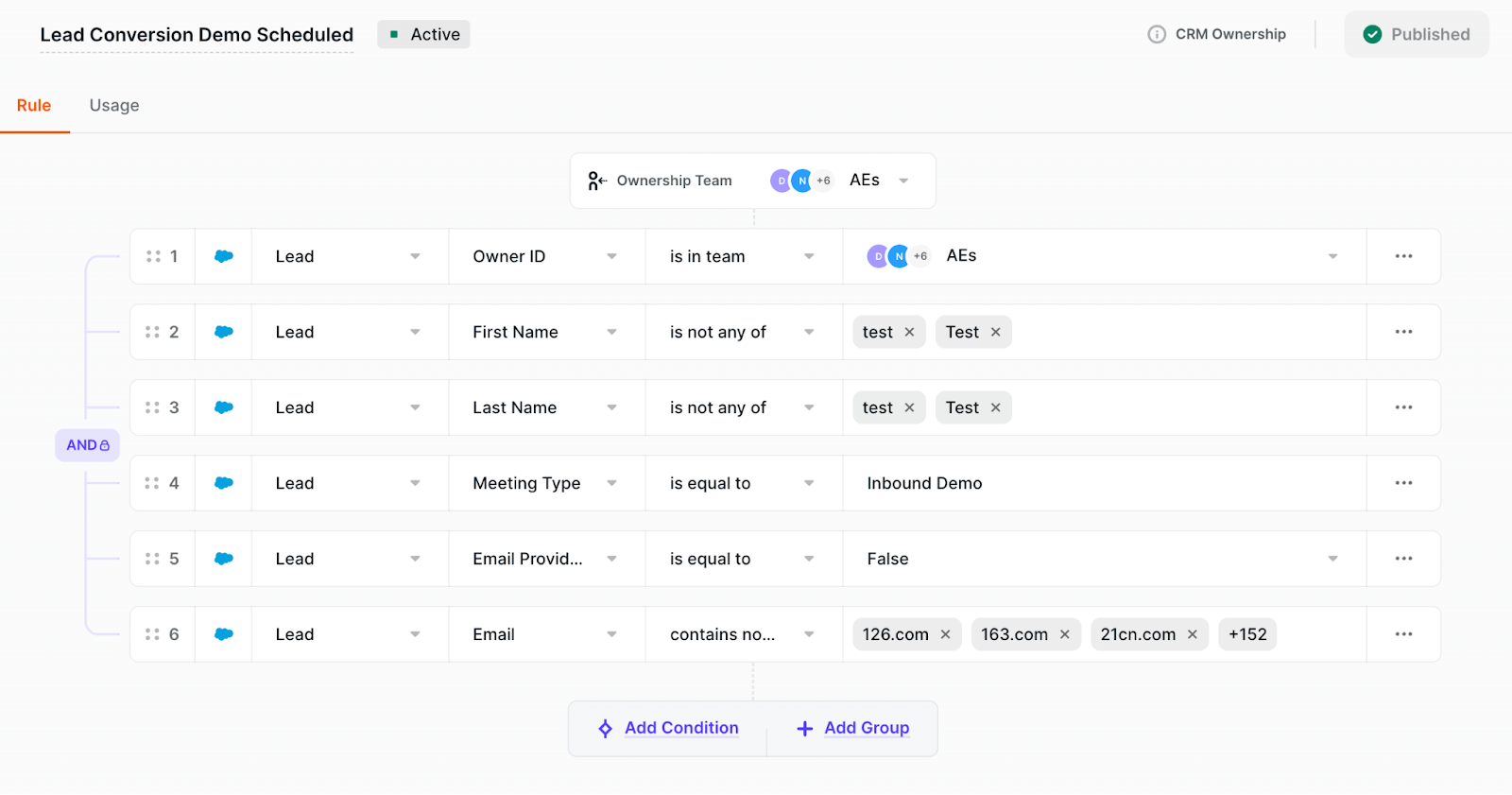
After that, we set up our routing rule. The main purpose of this is to make sure spam records aren't turned into Opportunities.
This basically means we don't let people through if their First Name/Last Name includes "test" or if they come from a "BS email domain" as Scott Haney would say.
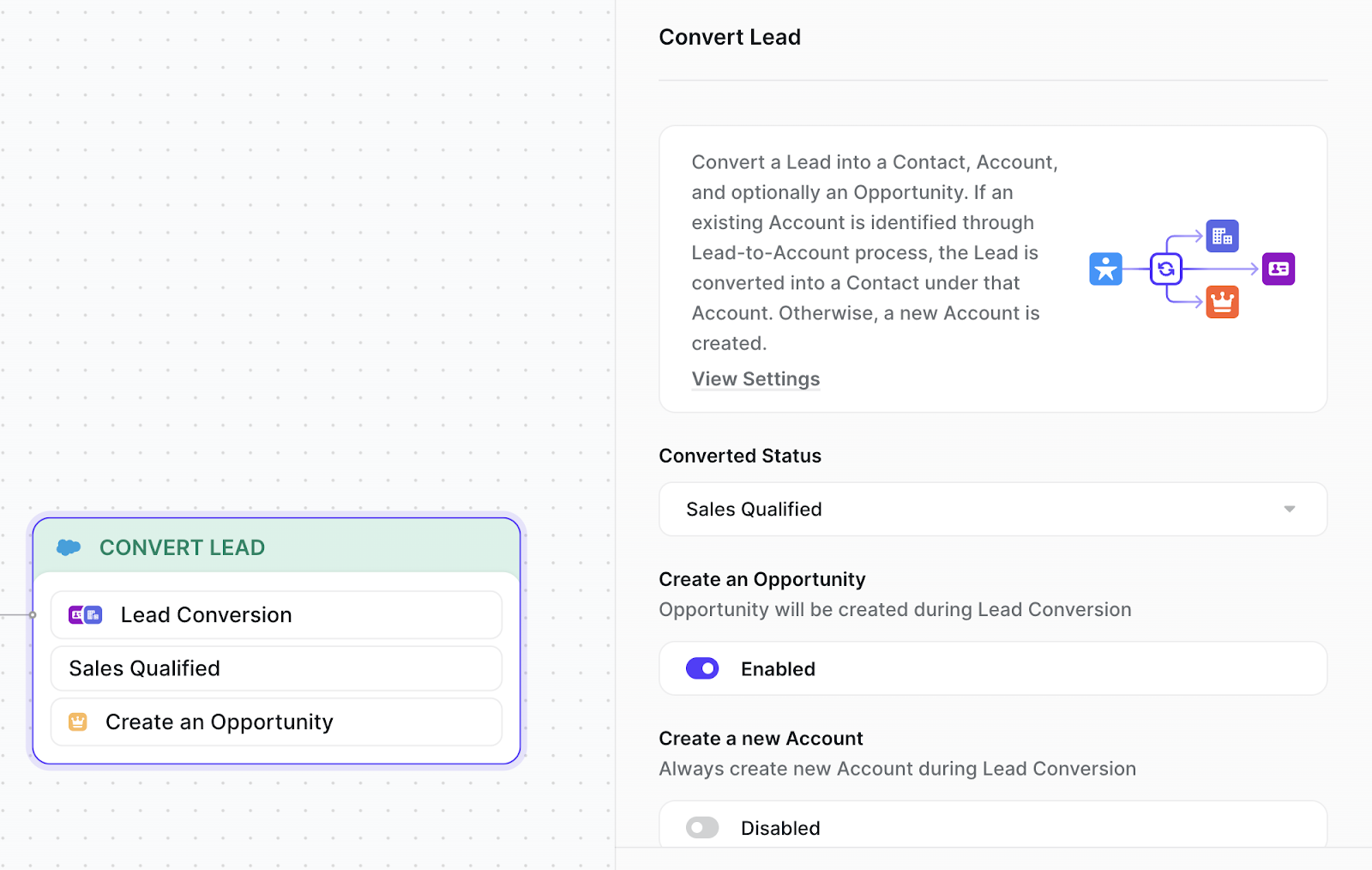
After that, we set up our Convert Lead node. In this case, Converted Status = Sales Qualified, and we've enabled "Create an Opportunity".
And just like that, hours of manual work have been saved.
4. Request for Solutions Consultant
Not to toot our own horn… but this is one of our favorite Distro flows.
It's a bit complicated, so this is one you might want to follow along in the webinar (time stamp 22:50).
From the Sales side, they simply click "Request a SC" on the Opportunity page.
Then, a Solution Consultant gets assigned, and a Chili Piper booking page shows up — so a rep can book a meeting with a Solution Consultant right then and there.
We have a flow set up in Salesforce to run this process.
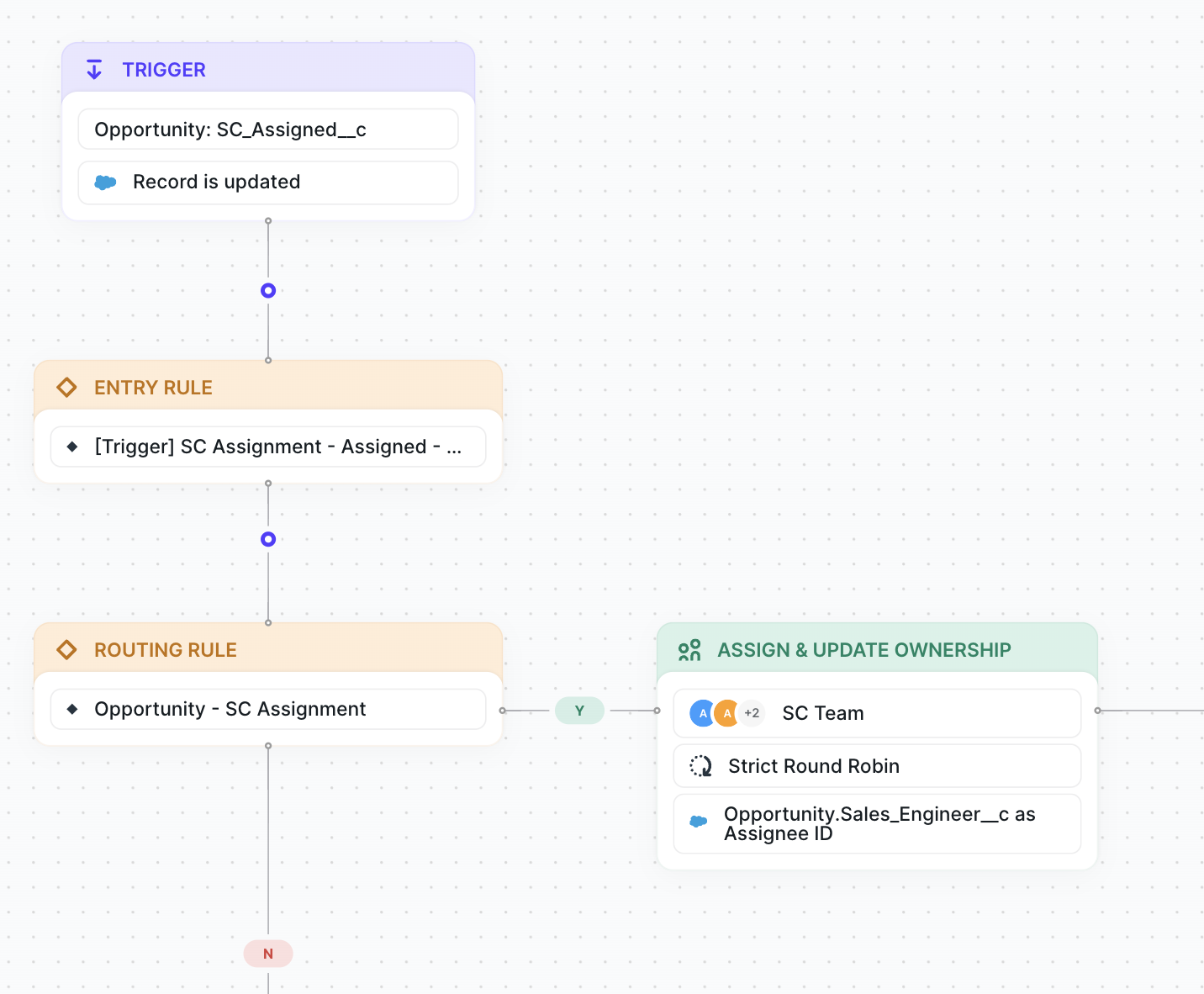
When "SC_Assigned_C" is updated to true, Distro steps in to assign a Solutions Consultant to the opportunity:
-
Create the Trigger: In this case, it's that the field "SC_Assigned_c" is updated
-
Create the Entry Rule: In this case, SC Assigned = True AND the Solutions Consultant Field is null
-
Create your Routing Rule: In this case, if Solutions Consultant field = null, then round robin between the Solutions Consultant team.
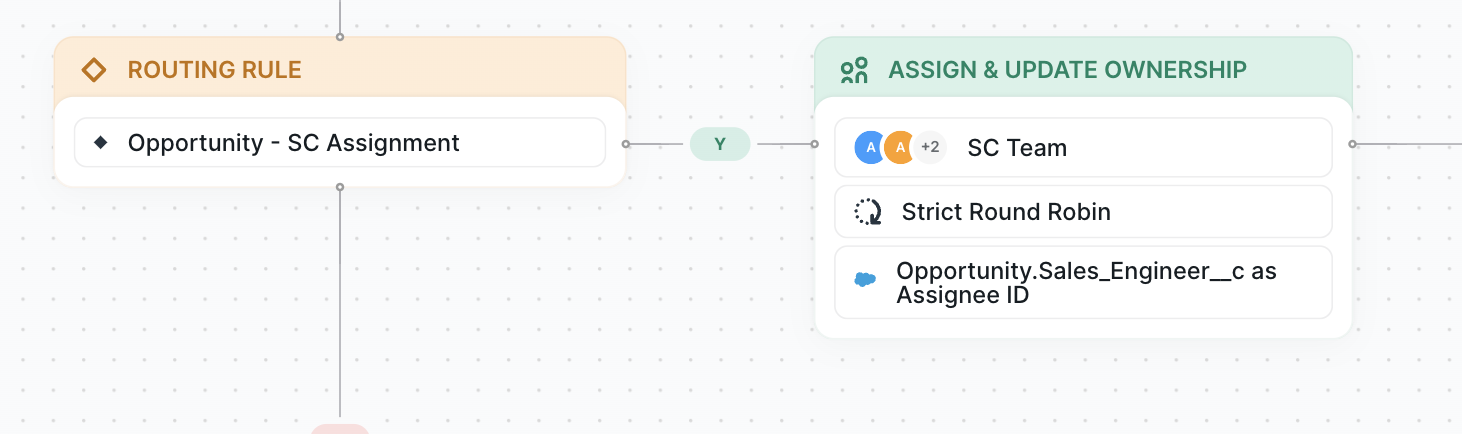
Boom.
5. New Customer Onboarding Assignment
Finally, we use Distro for assigning a Customer Success Manager after an account is Closed Won. (Webinar time stamp 26:46.)
First, we set up our Trigger and Entry rules:
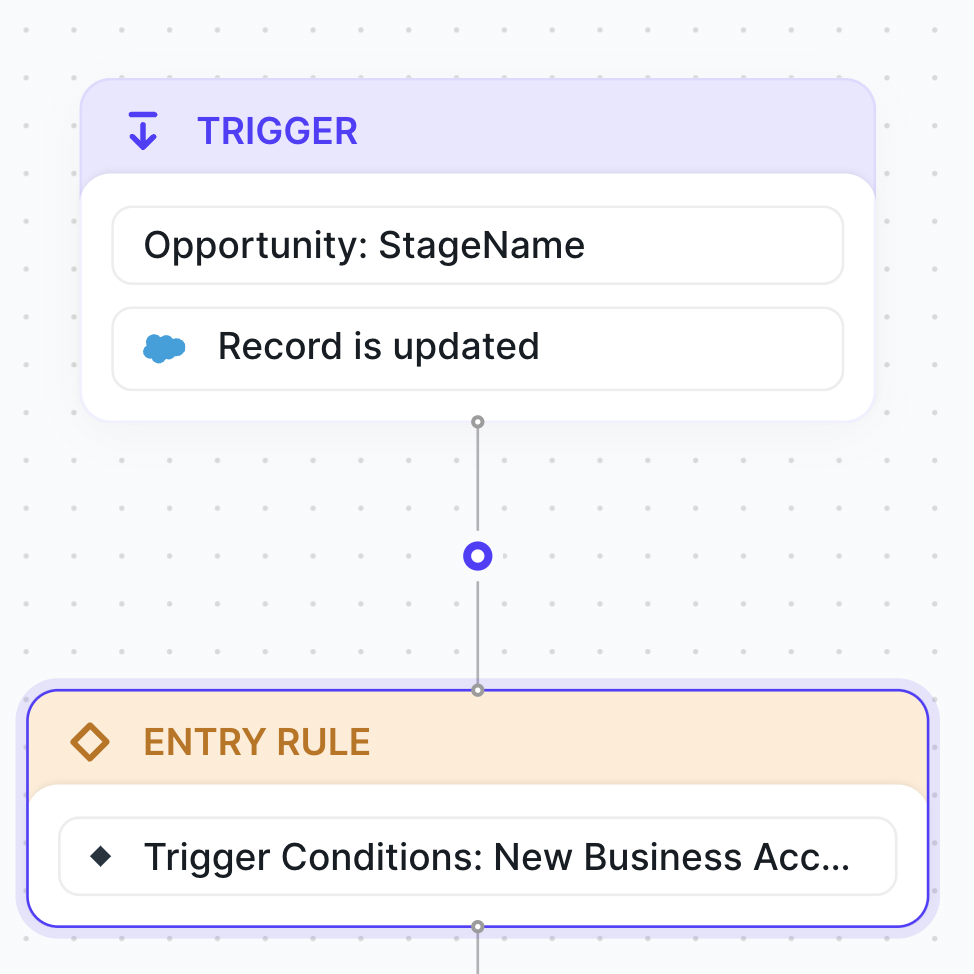
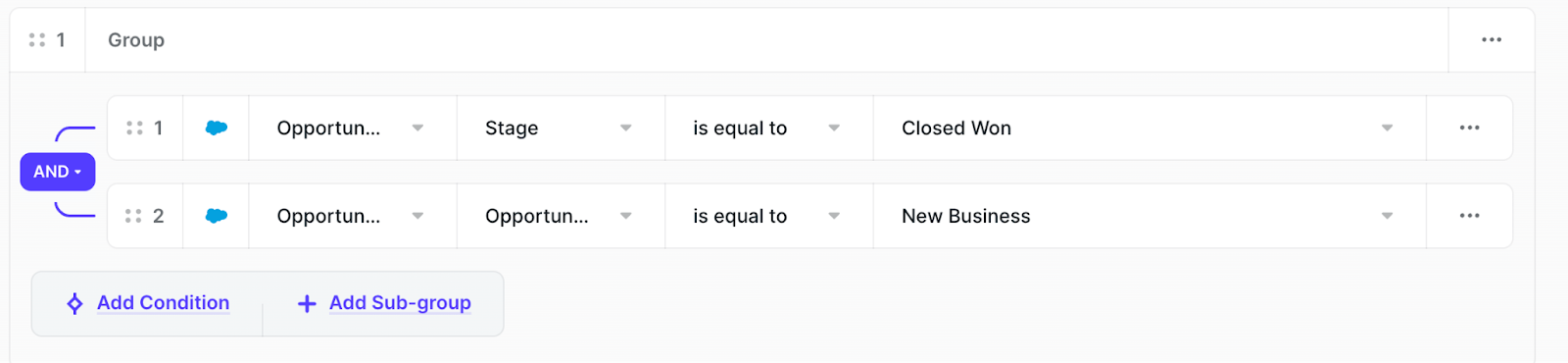
In this case, our entry rules are "Opportunity is equal to Closed Won" and "Opportunity is equal to New Business" — this excludes any expansion opportunities we win with current customers.
Then, Distro flows through our routing rules.
On our Customer Success team, we route according to both territory and contract value. Here's an example of what one of our rules looks like (for our SMB Customer Success team):
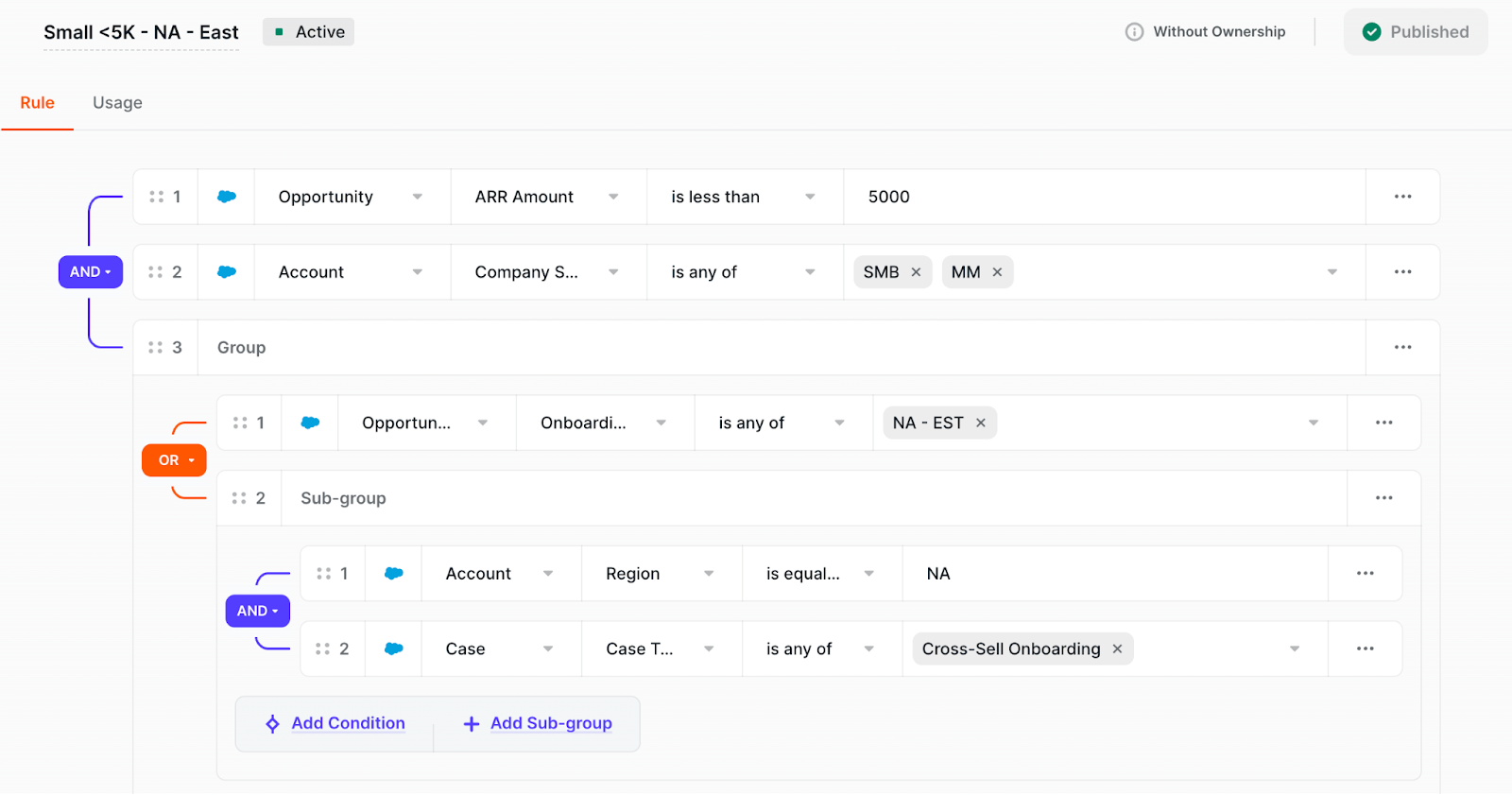
We've got one of these rules built out for each of our teams — and Distro waterfalls through our giant rule list until it finds one that sticks.
Start Your Free Trial of Distro
Ready to give Distro a spin? I thought you might be.
We're offering a 30-day free trial to try Distro out on your own! After you sign up for your trial, we'll be in touch to set up an onboarding call — to make sure you're getting the most out of Distro.
Sign up for your free trial here.
As you're playing around in the tool, make sure to pull up the Distro section of the Help Center. And if you run into any trouble, feel free to reach out to our customer love team at support@chilipiper.com.
Stay spicy y'all.