What Is an AI SDR — and What Makes One Inbound?

An AI inbound SDR is software that does the job an inbound sales development rep used to do: respond to inbound interest the moment it shows up, qualify the lead, get a meeting booked with the right rep, and make sure follow-up happens when a prospect drops off before booking.
That one word — inbound — carries most of the meaning, and most of the confusion. This guide explains what the category actually covers, how it differs from things it gets mistaken for, and what to require from any vendor selling one.
The job, in one sentence
When a qualified buyer fills out a form, requests a demo, or opens a chat on your website, an AI inbound SDR turns that hand-raise into a booked meeting on the right rep's calendar — in the same session, without a human in the loop.
Everything else in the category description is elaboration on those four steps:
- Instant response. The agent engages form fills, demo requests, and chat conversations in seconds, at any hour. Speed to lead is the founding reason the category exists: inbound buyers overwhelmingly shortlist whoever responds first, and human teams measure their response times in hours or days.
- Dynamic qualification. The agent qualifies the visitor against your ideal customer profile in a real conversation — informed by CRM data and enrichment — rather than walking them through a scripted decision tree.
- Routing and booking. Qualification is worthless if the meeting lands on the wrong calendar. The lead has to be routed on your actual rules — territory, account ownership, round-robin — and booked against real availability.
- Contextual follow-up. When a visitor drops off without booking, the agent makes sure a follow-up happens, carrying the context of what the visitor already said and did.
If a product doesn't attempt all four, it isn't an AI inbound SDR. It's a chatbot, a scheduling link, or a lead-capture form with better copy.
What an AI inbound SDR is not
It is not an outbound AI SDR. Most of the skepticism about "AI SDRs" — and there is plenty — comes from outbound: AI-written cold email at enormous volume, sent to people who never asked to hear from you. Inbound is a different job with a different failure mode. The buyer has already raised a hand; the machine's role is to remove every second and every handoff between that hand-raise and a booked meeting. Judging inbound agents by outbound results is like judging a concierge by the performance of a door-to-door salesman.
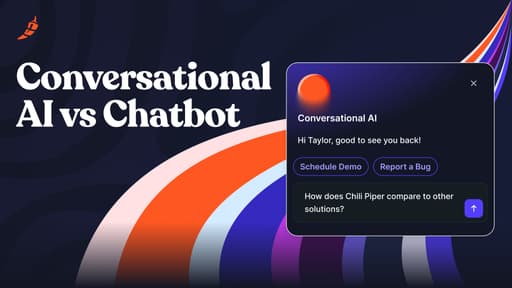
It is not a chatbot. Chatbots follow decision trees and end with a form or a calendar link. The qualifying difference is completion of the job: an AI inbound SDR finishes with a qualified, routed, booked meeting written back to your CRM — not with "a member of our team will reach out."
It is not (necessarily) one product. Some vendors sell the role as a single closed agent that chats, qualifies, books, and follows up entirely inside its own walls. Others deliver it as a system of components that reach into the tools a revenue team already runs. Both can legitimately claim the category; they behave very differently after purchase. A closed agent means a second place your routing rules live. A composed system runs the downstream action through your existing CRM, sequencer, and messaging tools.
Why teams buy one
Three problems drive nearly every evaluation:
- Response time. The gap between a form fill and a rep's first touch is where inbound pipeline dies. If your median response is measured in hours, a meaningful share of your demo requests are booking with a competitor before your rep opens the notification.
- After-hours and overflow coverage. Hand-raises don't keep office hours. Buyers in other time zones, weekend researchers, and campaign spikes all arrive when nobody is staffed to respond.
- The economics of the inbound SDR role. Paying a human to gatekeep calendars, check routing rules, and send availability is expensive, and it's the part of the SDR job people burn out on. Teams that automate it typically redeploy those SDRs to work that needs judgment — outbound, ABM plays, event follow-up.
The requirements list
Whoever writes the requirements list tends to win the evaluation, so read every vendor's checklist — including this one — knowing who wrote it. That said, these are the requirements we'd put in front of any buyer, and the honest questions to press on:
- Response in seconds, on every inbound channel. Forms, demo requests, and chat. Ask to see the latency, not hear about it.
- Conversational qualification against your ICP — using enrichment and CRM data the visitor never has to type.
- Native routing. This is the most commonly missing piece in the category. Many AI SDR agents cannot route leads at all, which is why buyers frequently end up purchasing separate lead-routing software alongside them — two contracts and two rule engines for one funnel. Require territory rules, account ownership, and calibrated round-robin in the same product.
- Real scheduling depth. Group meetings, multi-location teams, weighted distribution, no-show calibration. A personal booking link is not scheduling infrastructure.
- Rep-to-rep handoff. When qualification says "AE, not SDR," the meeting should move to the right calendar with context intact.
- CRM write-back of everything — meetings, reschedules, transcripts, qualification answers — without depending on rep discipline.
- Follow-up that runs through your stack. When a visitor drops off, the follow-up should be triggered through the email and sequencing tools you already run, where your deliverability and compliance already live.
- A live demo of the whole loop. Hand-raise to booked meeting, on your forms and your rules. Anything a vendor can't demo today is roadmap, whatever the deck says.
And the questions to press every vendor on, because the category's marketing runs ahead of its shipping:
- Visitor identification: account-level identification (which companies are on your site) is common; contact-level de-anonymization (naming the individual) is rarer and often overstated. Ask to see it on your own traffic.
- Autonomous email: "our AI follows up with your leads" can mean anything from drafts a message a human approves to sends autonomously from a rep's inbox. Get the exact mechanics, because the difference shows up in your domain reputation.
- Nurture: a follow-up email is not a nurture program. If sustained multi-touch sequences matter, ask which system actually runs them.
Where Chili Piper fits
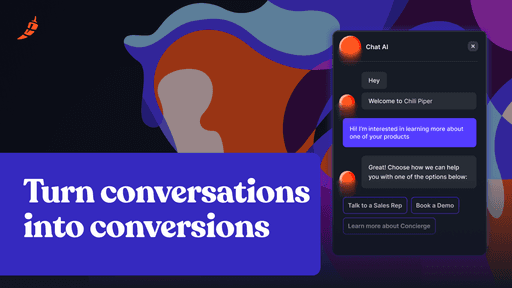
Full disclosure of our stake: Chili Piper's AI Inbound SDR is our entry in this category, composed of four agents — Concierge for instant booking from forms, Chat AI for conversational qualification, Orchestrator to trigger downstream action through your existing stack, and Email Composer to draft the follow-up it triggers.
Our bias in the checklist above is easy to locate: we started as the routing and scheduling layer for revenue teams, so requirements 3 through 6 are where we're strongest — and we listed the press-on-this questions because they're the ones we'd rather answer honestly in an evaluation than have discovered after one.
FAQ
Does an AI inbound SDR replace human SDRs? It replaces the inbound-response part of the job — the part where being human is a disadvantage, because humans sleep, batch their notifications, and take lunch. Teams that deploy one usually redeploy their SDRs to outbound and account-based work rather than eliminating the function.
How is this different from a scheduling tool? A scheduling tool books a meeting once a human decides one should happen. An AI inbound SDR makes that decision — qualifying the visitor and routing the lead — and then books the meeting. Scheduling is the last step of its job, not the whole of it.
What does implementation look like? Simpler than most teams expect, if the product works with your existing forms and CRM: the agent attaches to the forms and chat you already run and routes on rules mapped from your CRM fields. Be more skeptical of implementations that require replacing your forms, chat, and routing at once.
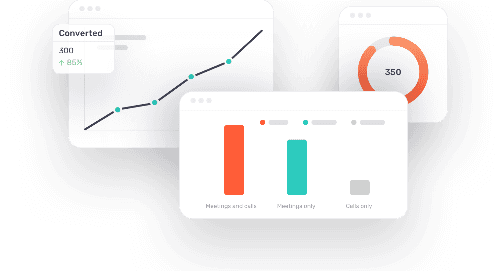
How should we measure one? Time-to-first-response, hand-raise-to-meeting conversion rate, show rate, and speed to lead percentiles. And measure them on qualified traffic — an agent that books meetings with everyone is doing a different, worse job than one that books meetings with your ICP.