Lead conversion rate formula and how to improve yours

Getting new leads for your business is great, but turning them into paying customers is what drives growth. That's why you should know your lead conversion rate. It shows how efficiently you're turning prospects into clients and helps you determine where your marketing or sales efforts fall short.
In this guide, we'll share the lead conversion rate formula, what a good conversion rate looks like, and 5 tips on how you can boost conversions.
What is Lead Conversion?
Lead conversion is the process of turning a lead into a paying customer. This is where their interest becomes action, and they go from researching your product or service to actually paying for it.
The process includes everything your business does to convert leads into new customers. This means sharing valuable content, following up with personalized outreach, guiding them through product demos, addressing objections, and more.
Leads follow several steps on the way to becoming customers. This is not what we do at Chili Piper, but the traditional conversion process involves nurturing:
- Visitors to become leads
- Leads to become marketing qualified leads (MQLs)
- MQLs to become sales-qualified leads (SQLs)
- SQLs to become customers
At each step, you must create opportunities for the lead to take some action to move to the next step. Every business follows a different process, but the ultimate goal of lead conversion is the same: to convert leads into customers.
Lead Conversion Metrics
Lead conversion metrics help you to objectively measure the success of the marketing and sales teams in generating leads, converting them into customers, and doing it efficiently.
Two of the most common metrics are lead conversion rate and lead-to-sale conversion rate.
Lead Conversion Rate
Lead conversion rate shows the percentage of leads that become paying customers. It's one of the most efficient indicators of how well your marketing and sales efforts are working.
You can calculate your lead conversion rate with the following formula:
Lead conversion rate = (Number of new customers / Number of leads) x 100
A high conversion rate is a clear indicator that you're attracting the right audience and qualifying leads. On the other hand, a low rate can signal poor lead quality, unclear messaging, slow speed-to-lead, or friction in the buyer journey.
Lead-to-Sale Conversion Rate
The lead-to-sale conversion rate shows how many of your leads actually become new customers. Here's how you can calculate your lead-to-sale rate:
Lead-to-sale conversion rate = (Number of sales / Number of qualified leads) x 100
You can spot gaps in your sales process by tracking your lead-to-sale conversion rate. A low rate might show that your sales reps need more training, the handoff isn't that smooth, or that your leads qualification process needs more criteria.
Improving your lead-to-sale conversion rate can get you more revenue without having to generate more leads.
What's a good lead conversion rate?
A "good" lead conversion rate depends on multiple factors, like industry, sales cycle, marketing sources, and how expensive your product or service is. Most industries have a conversion rate between 2 and 5%.
Certain industries, such as B2B SaaS, have a higher conversion rate, between 5% and 10%, due to their marketing efforts and subscription-based business model.
How to Increase Your Lead Conversion Rate
You can't just spend more money on ads and expect your lead conversion rate to improve. Instead, make sure you create a smooth experience for the right prospects and make them feel confident buying from you.
Here are 5 proven strategies to help you boost conversions:
1. Optimize Your Lead Capture
Before you can convert a lead into a customer, a visitor must become a lead. That means qualifying the lead and getting their information.
Besides their name and email address, think about the details you need to qualify a prospect without overwhelming them. Ask enough questions to understand their needs and buying potential, but not so many that it creates friction and they quit filling out your forms.
To shorten your forms and still get enough data to qualify your leads, consider using data enrichment tools. You can fill in key details, such as company size, industry, or job title, based on your lead's email address and name.
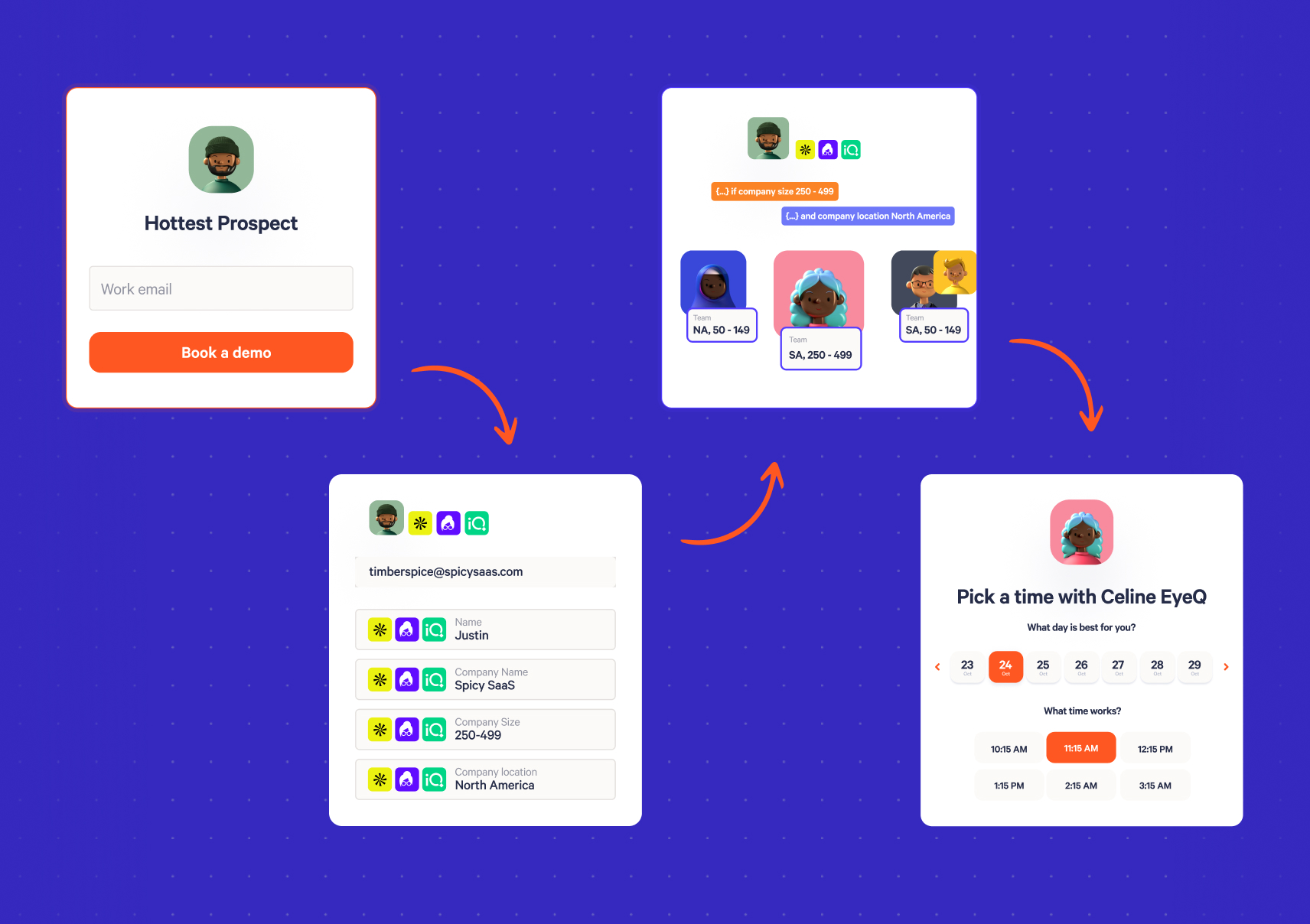
This helps you keep your forms short and easy while your team gets the necessary data to prioritize your leads and follow up efficiently.
2. Improve Lead Qualification
Quantity is not better than quality, especially when it comes to dealing with leads. Filling your pipeline with unqualified prospects only wastes time and slows down your sales team.
Start by aligning your sales and marketing teams on what makes a lead qualified. Answer the following questions:
- How do you differentiate between MQLs and SQLs?
- What is required for an SAL (sales-accepted lead) to become an SQL?
- What actions and criteria indicate that a lead is sales-ready (i.e., showing sufficient interest and intent to buy)?
- Who is responsible for verifying the quality of the leads?
Being able to instantly qualify leads from your lead capture form will result in more qualified held meetings (QHMs). This also means less time spent on leads that are less likely to convert into customers and better lead-to-sale conversion rates.
3. Nurture Your Leads
Once a visitor becomes a lead, it takes some work to turn them into a paying customer. When someone enters your funnel, you should guide them through the buyer's journey with the right information and timely touchpoints.
Lead nurturing works by segmenting your leads and sharing personalized, relevant content that keeps them engaged until they're ready to buy.
After a visitor fills out a landing page form, books a demo, or downloads a resource, you should start the lead nurturing process. Often, it involves:
- Following up with relevant messaging
- Grouping the lead according to their interest and behavior
- Using triggers to send email marketing messages based on specific actions and responses
- Forwarding the leads to sales when they're ready to buy
4. Increase Your Speed to Lead
Did you know that "a lead is 21x more likely to convert if you call within 5 minutes than if you called after half an hour"?
Speed to lead is an effective strategy for converting leads into customers. The faster you can make contact with a lead, the more likely the lead is to convert.
One way to significantly boost your speed to lead is to qualify your leads and let them book a meeting on the spot. Instead of waiting for a rep to follow up, tools like Chili Piper's Concierge helps your leads book a demo instantly with the right rep.
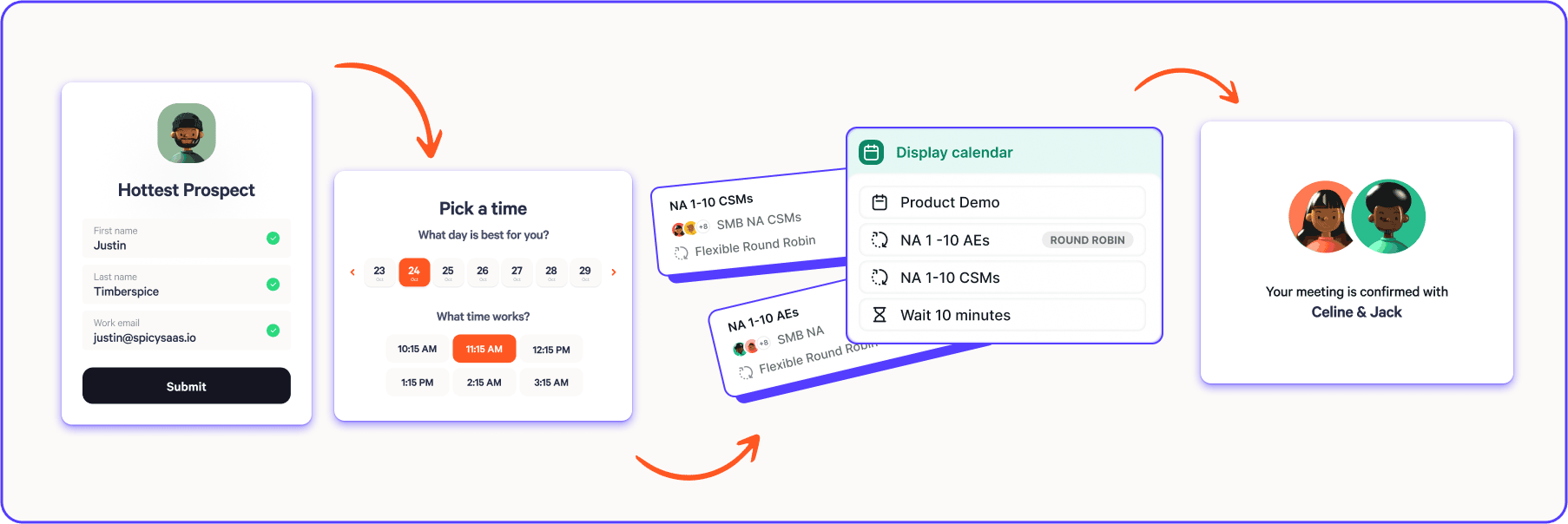
This also works for meetings that require multiple stakeholders. Instead of losing momentum while everyone syncs their calendar, Chili Piper checks the available times for the entire group and locks in a demo instantly.
This means no back-and-forth emails and a much smoother experience for your leads.
5. Add Social Proof to Your Funnel
Your prospects want to know why other people choose your product or service and if they got real results. The more social proof you add to your sales funnel, the easier it is for your prospects to turn into leads.
Showcase customer success stories, testimonials, and case studies on your website, landing pages, and emails. Highlight key metrics, such as time saved, gained revenue, or process improvements, to make it relevant for your prospects.
Add reviews and third-party ratings on your pricing pages or sign-up forms. Additionally, use recognizable client logos or industry certifications to build confidence and show that your solution is trusted by well-known brands.
The goal is to remove any doubts and convince your prospects to click the Book a demo or Get started buttons.
Look Beyond Your Conversion Rate
Knowing how to calculate your lead conversion rate is important, but you shouldn't chase numbers just for hitting a target. Your conversion rate matters, but the real focus should be on creating a smooth buyer journey that makes it easy for your prospects to feel confident choosing your business.