AI is everywhere, so why are leads still slipping through the cracks?
I spend most of my days talking to B2B demand gen leaders and revenue operators. At the end of 2025, I ran two surveys to confirm what I kept hearing in those conversations.
The pattern was clear: "AI hasn't eliminated their funnel leaks. It's exposed where they already existed."
Among marketing leaders, 92% are already using AI for content creation, and 59% use it for optimization. Among operators, 38% say AI is embedded in multiple workflows. But when we dug into their actual pain points, the problems hadn't changed.
High-intent signals - pricing page visits, demo requests, repeat site visitors from target accounts, viewing support documentation - show up constantly. But most teams can't act on them in real time.
B2B marketing teams have AI in their stack. They're piloting agents, running workflows, testing tools across demand gen and sales ops. But the problems haven't changed: traffic doesn't convert, follow-up is inconsistent, and leads fall through the cracks.
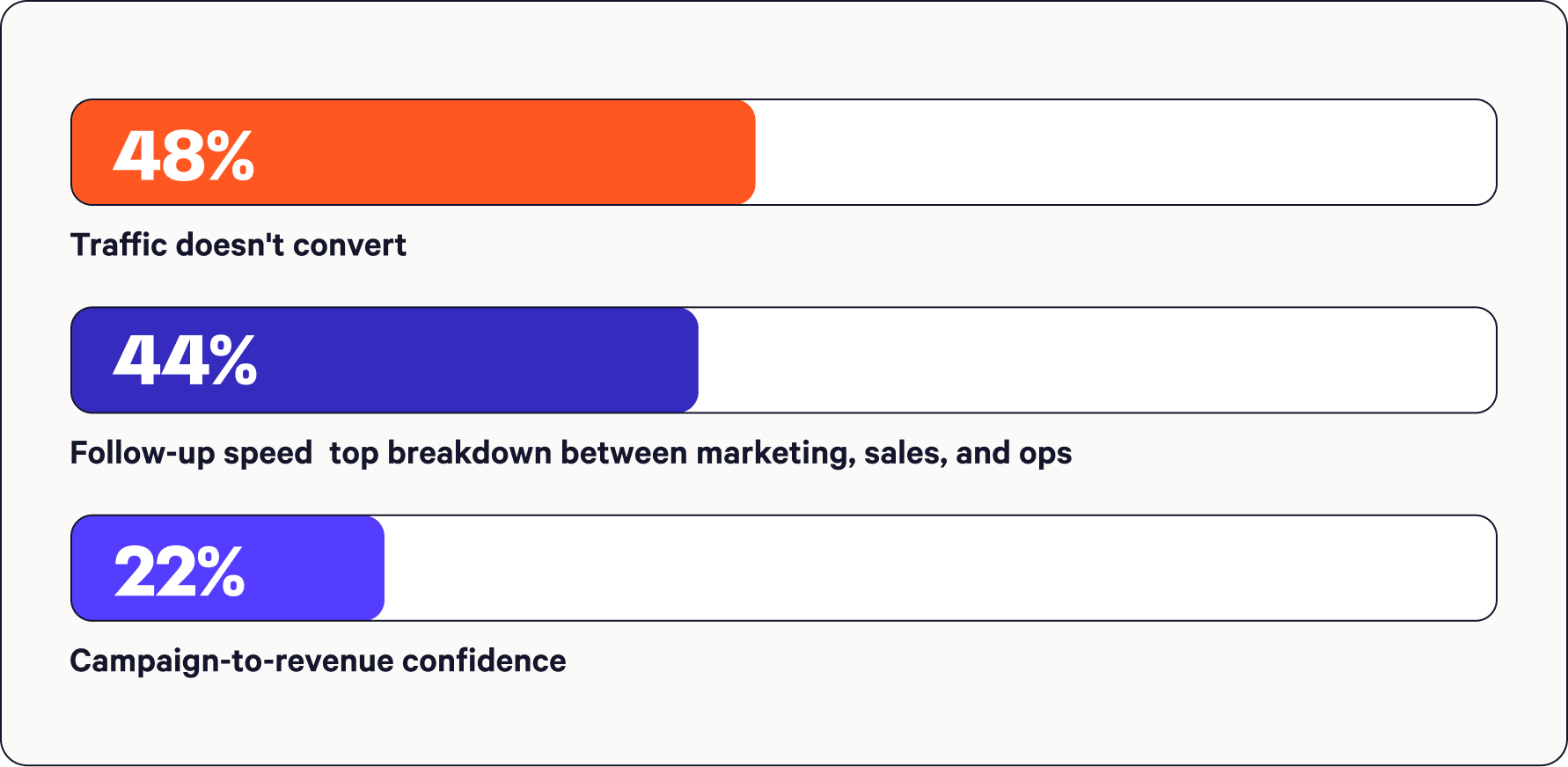
Most teams don't have a demand problem. They have an execution gap after intent
Pipeline is how revenue teams measure success. They're doing expensive work to drive traffic across channels. The traffic shows up… then what?
We asked where the biggest drop-offs happen. The answers revealed three critical leak points: anonymous visitors who never engage, engaged visitors who don't convert to forms or chats, and qualified leads who never book meetings. Each stage represents a moment where intent dies because the system can't respond.
When leads do convert, it's incredibly difficult to connect campaigns back to meetings and revenue. 37% of marketing leaders cited reporting and attribution as their biggest breakdown between teams. The data exists, but the systems don't connect it.
The breakdown happens in a specific moment:
- A buyer shows intent.
- The system hesitates.
- The handoff breaks.
- The lead cools off.
Ask yourself: "What happens to a high-intent visitor who lands on your site at 7pm? If the answer is nothing until tomorrow or it depends, you've found your leak." Best-in-class teams respond in under 5 minutes, regardless of time of day. Most teams? Hours, if at all.
Only 22% of marketing leaders said their tools integrate well enough for data to flow cleanly between systems. When systems don't talk, speed-to-lead becomes speed-to-nowhere.
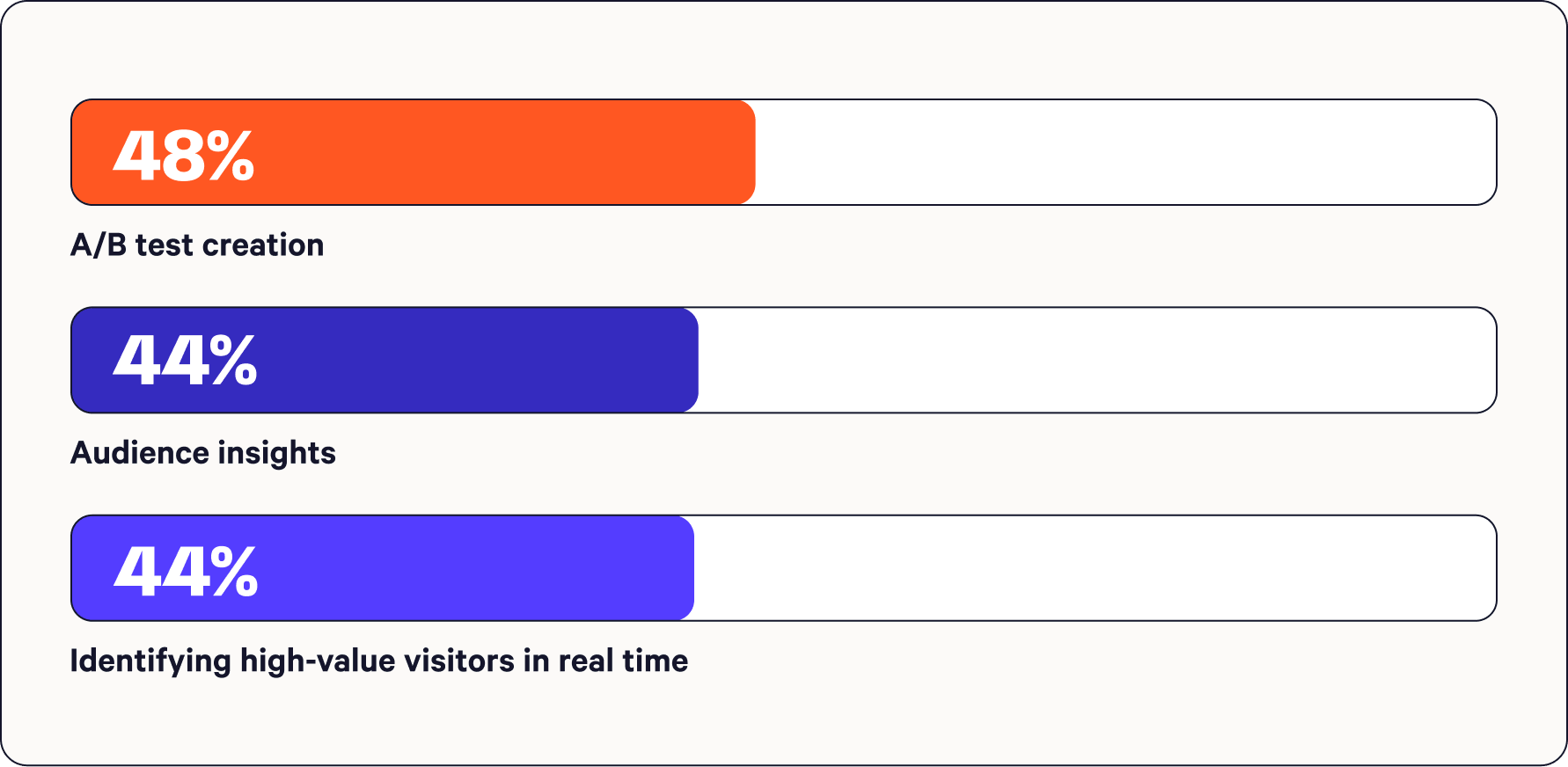
AI is trusted when it replaces a real operational failure, not when it adds another layer
Here's where it gets interesting.
When I asked marketing leaders what AI capabilities they wanted most, the answers clustered at the top of the funnel:
Automated follow-up? Only 30% wanted it. Lead scoring? 19%. Routing to the right rep? Just 4%.
Then I asked operators, the people living in the execution gap, to rate the same types of capabilities.
Operators were nearly 5x more interested in a Routing and Follow-Up Bot than a LinkedIn Sales Nav bot. They don't want help finding people; they want help making sure leads don't fall through the cracks once they appear.
Leadership is optimizing for creativity and insights. Operators are desperate for execution.
That gap tells us everything.
Operators kept circling the same failure points: speed-to-lead breaks down, no-shows require manual follow-up, routing isn't consistently enforced, context is lost between systems. When we asked them to rank different AI agents, the pattern was clear: they wanted tools that do work, not tools that provide insights. ICP finders and email automation topped the list. Sentiment analysis? Dead last.
Here's what made operators skeptical of new AI tools: Most teams are already over-tooled. They have CRMs, MAPs, enrichment tools, call recorders, plus manual effort, spreadsheets, and prayers holding it all together. Only 11% said AI currently integrates across their marketing and sales processes. Adding another tool doesn't solve the integration problem, it makes it worse.
One pattern showed up repeatedly: operators would rate an agent highly, then say they'd only use it if it were included in their existing plan.
The bar is simple: Does this replace something real that we already experience? Can I trust it won't create more risk? Does it work inside our existing workflows? Can I prove it helped generate pipeline? If the answers aren't clear, it gets filed under 'nice to have.'
A quick litmus test: "If you can't name the specific manual task AI would eliminate, your team won't adopt it."
I've seen teams go from responding to leads in 3 hours (on a good day) to under 2 minutes just by fixing their routing and follow-up workflows. They didn't need a new AI tool; they needed to close the loop. Now that the leak is plugged, they can confidently layer AI on top.
Where to start fixing it
Traffic is expensive. Teams are lean. Buyers expect fast, relevant responses. Every hesitation after intent costs real pipeline.
The lesson isn't that AI is overhyped. It's that "AI doesn't fix broken revenue plumbing by default."
The teams that see impact won't be the ones with the most AI features. They'll be the ones who use AI to make sure high-intent leads are recognized, owned, and followed up on, every single time.
Here's how to find your leak and fix it:
-
Audit the moment after intent. Pick one high-intent action - demo request, pricing page visit, form fill. Track exactly what happens: How long until someone responds? Who owns it? Where does it go in your CRM? What's the drop-off rate? Track it for a week. You'll find your leak.
-
Identify one loop AI could close. Not the most impressive use case, but the most painful one. Speed-to-lead, follow-up consistency, routing accuracy - pick one.
-
Measure it before you automate it. If you can't prove the problem is costing you pipeline today, you won't be able to prove AI fixed it tomorrow.
The fix isn't adding more tools. It's making sure the moments immediately after intent, the handoff, the routing, the follow-up, actually work.
The gap between intent and action is costing you more than any tool will ever cost.
Want help finding where revenue is leaking in your funnel? We work with revenue teams to diagnose execution gaps and close the loop between intent and action.