Assigning Churned Logos to SDRs To Win Back Customers and Combat Churn
Introduction
Rather than abandoning accounts after churn, organizations can recover lost customers by leveraging existing knowledge of their situation. Chili Piper demonstrates how automating win-back campaigns through their Distro product reduces manual work while maintaining even SDR distribution and preventing friction between teams.
Rules of Engagement for Sales and Customer Success
Teams should establish mutual operating principles—called Rules of Engagement (ROE)—that define collaboration, prevent conflict, and address resolution. For churned accounts, the framework includes:
- A 90-day post-Closed Lost opportunity period where pre-sales and SDR teams can actively engage churned accounts
- After 90 days, Account Managers and Customer Success Managers gain the ability to pursue win-back efforts
- If no contract is signed within the window, sales and marketing campaigns may resume outreach
Distro Configuration Settings
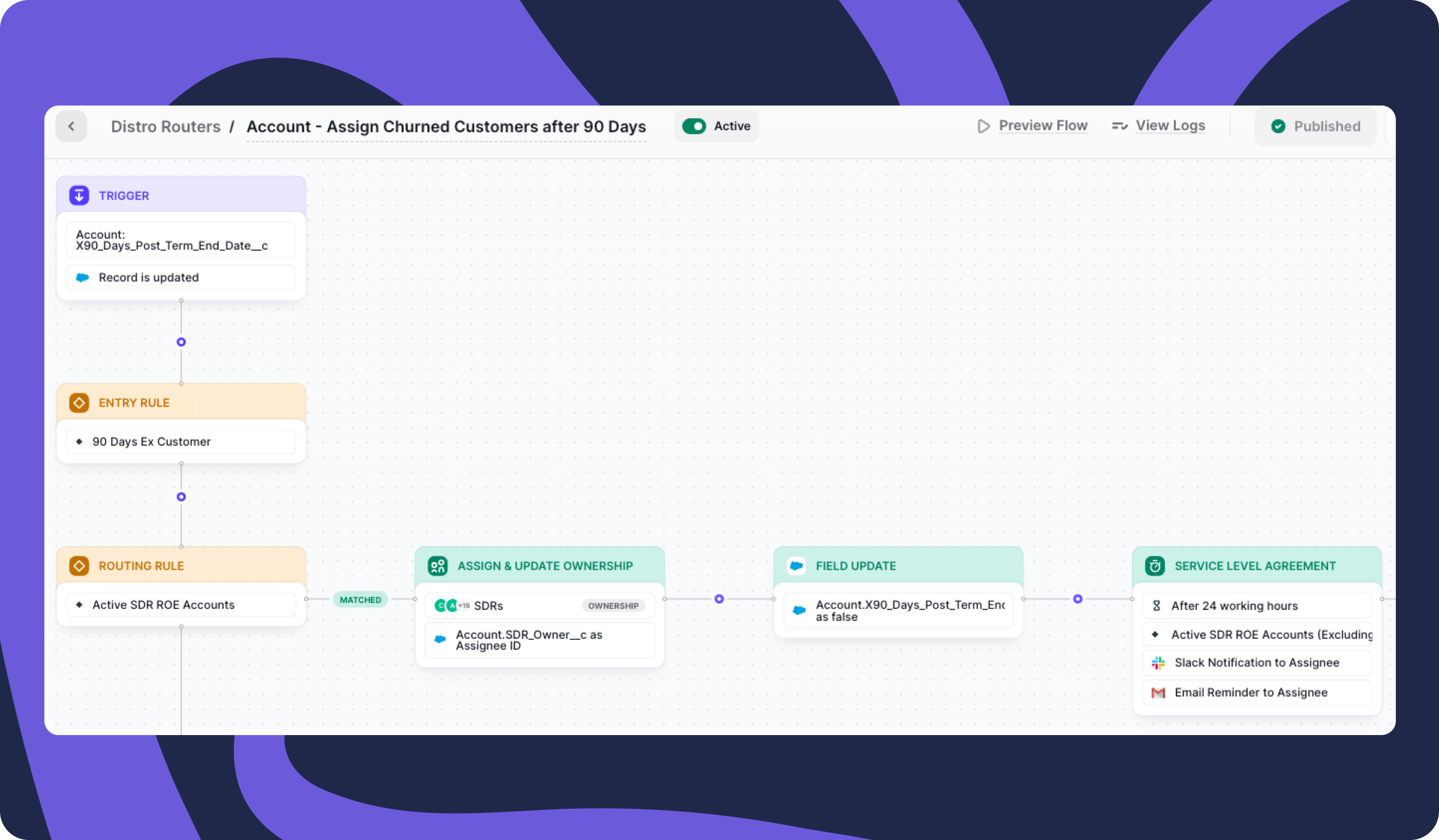
The automation requires these specific rules:
- Account Status updated to "Churned"
- Transaction End Date set to 91 days
- Round robin distribution across SDR team with SDR Owner updates
- 12-hour SLA triggers Slack notifications if activity is minimal and ROE phase is active
- 12-hour SLA reassigns accounts if engagement criteria aren't met
Additional notifications include alerts to Account Managers at 80 days post-contract end and SDR notifications upon assignment at 91 days.
Enablement and Contextual Information
Representatives require accessible account context without workflow disruption, including:
- Original opportunity participants
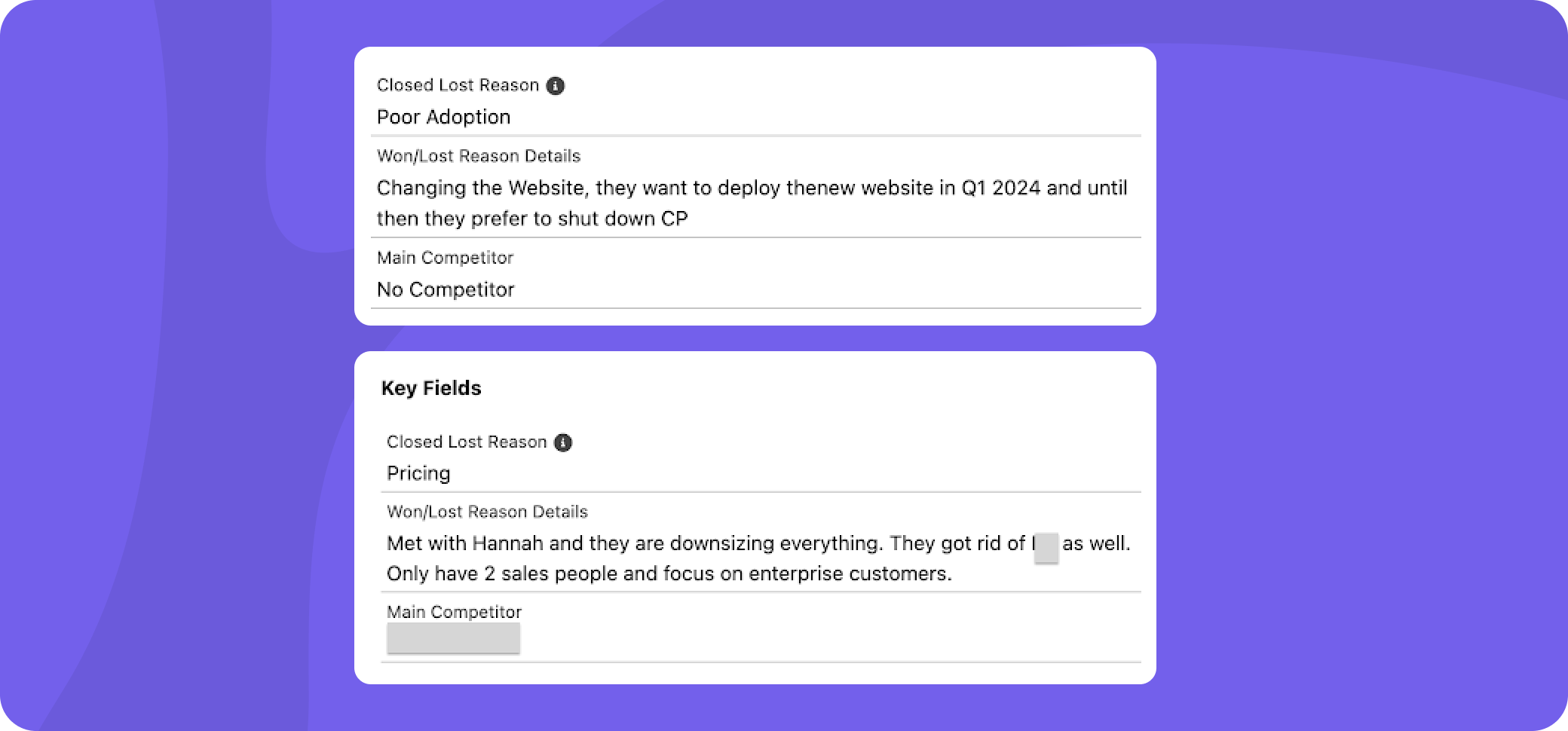
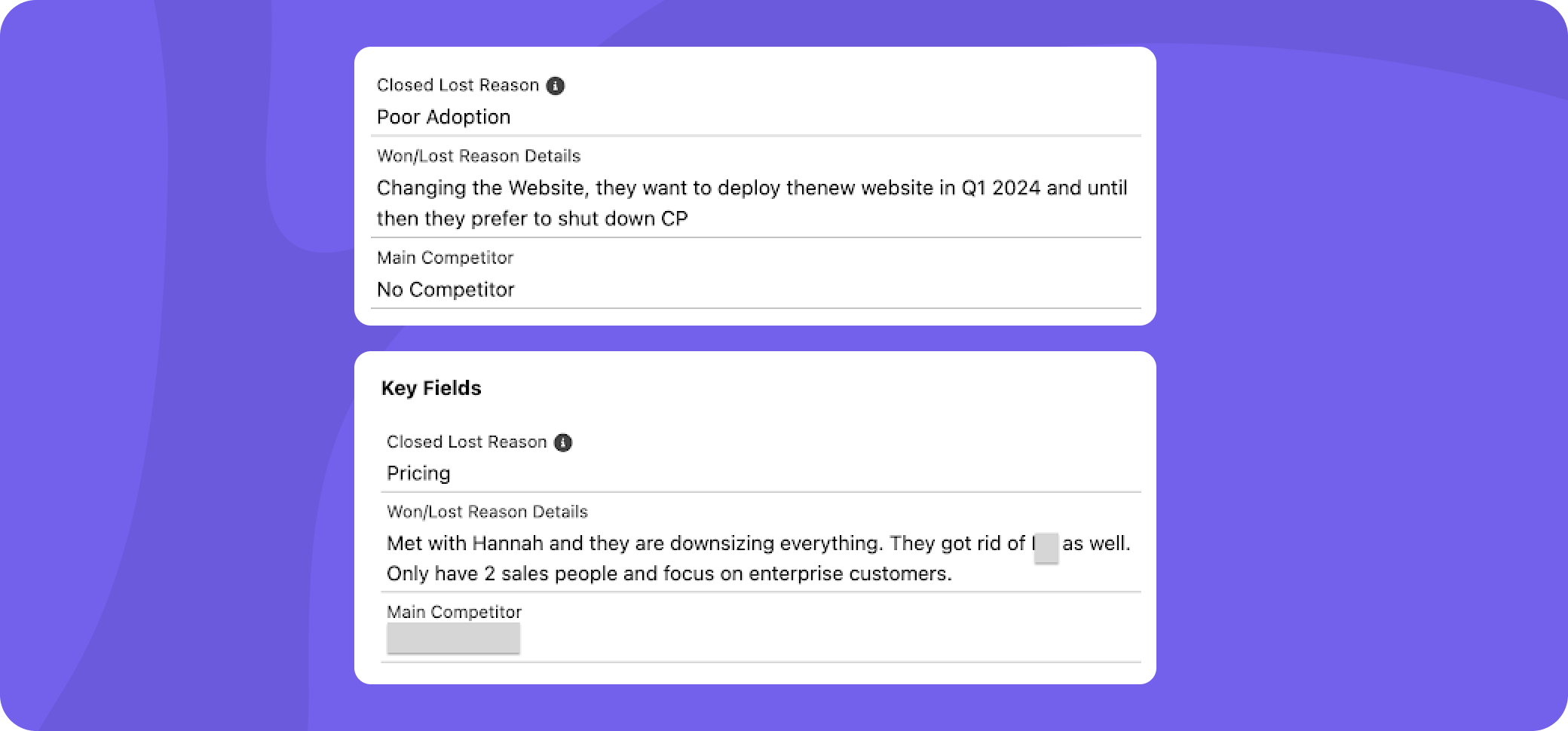
- Churn reasons
- Recently launched features relevant to the account
Performance Monitoring
Leadership needs visibility into rep success rates and initiative performance to identify top performers, replicate messaging, and validate resource allocation.
Results and Impact
By automating this process, SDRs eliminate manual review work. For mid-market companies churning 30 logos monthly, the time savings are substantial: 150 minutes (5 minutes per account review) plus 300 minutes (10 minutes per account research). Remarkably, win-back meeting rates match target account outbound performance, disproving assumptions about zero conversion potential.
At Chili Piper, we’ve won back a lot of customers with this approach, which is why we’ve automated this process. In this edition of SpicyOps, we’re going to pull back the curtain and break down exactly how we do it.
Using Distro, our lead routing and distribution product, we have reduced the time spent by SDRs on reviewing and reaching out to ex-customers in win-back campaigns and ensured an even distribution of ex-customers across the SDR team. We have also limited the potential friction between AMs and SDRs and removed ambiguity around who should be working the account, and when.
Rules of Engagement for Sales and Customer Success
First, let’s start with guidelines that we give the team that tell them how to work together, which we call Rules of Engagement (ROE). These are operating principles mutually created and agreed on between teams for how they will A) work together, B) prevent conflict, and C) resolve conflict if and when it arises. A single team that regularly collaborates across many teams may have many sets of ROEs, one with each of the teams where collaboration happens most.
Aligning our customer success teams with sales and marketing efforts ensures a cohesive approach to winning back churned customers.
Here are the Rules of Engagement between the pre-sales and post-sales for churned accounts:
-
When a customer churns, there is a 90-day period following the Closed Lost opportunity date where pre-sales/new business reps are allowed to touch the account, including the AE and SDR teams
-
This means that 90 days from the Closed Lost opportunity date, the AMs and CSMs can perform any actions to help win the churned customer back
-
If no contract is sent within the 90-day window, AEs and SDR teams are free to re-engage with the churned customer through sales and marketing campaigns.
Now, let’s explore how we use our Distro product to automate this, saving our reps hours of manual work.
Settings In Distro
Here are the rules you’re going to set to make this all happen automatically:
-
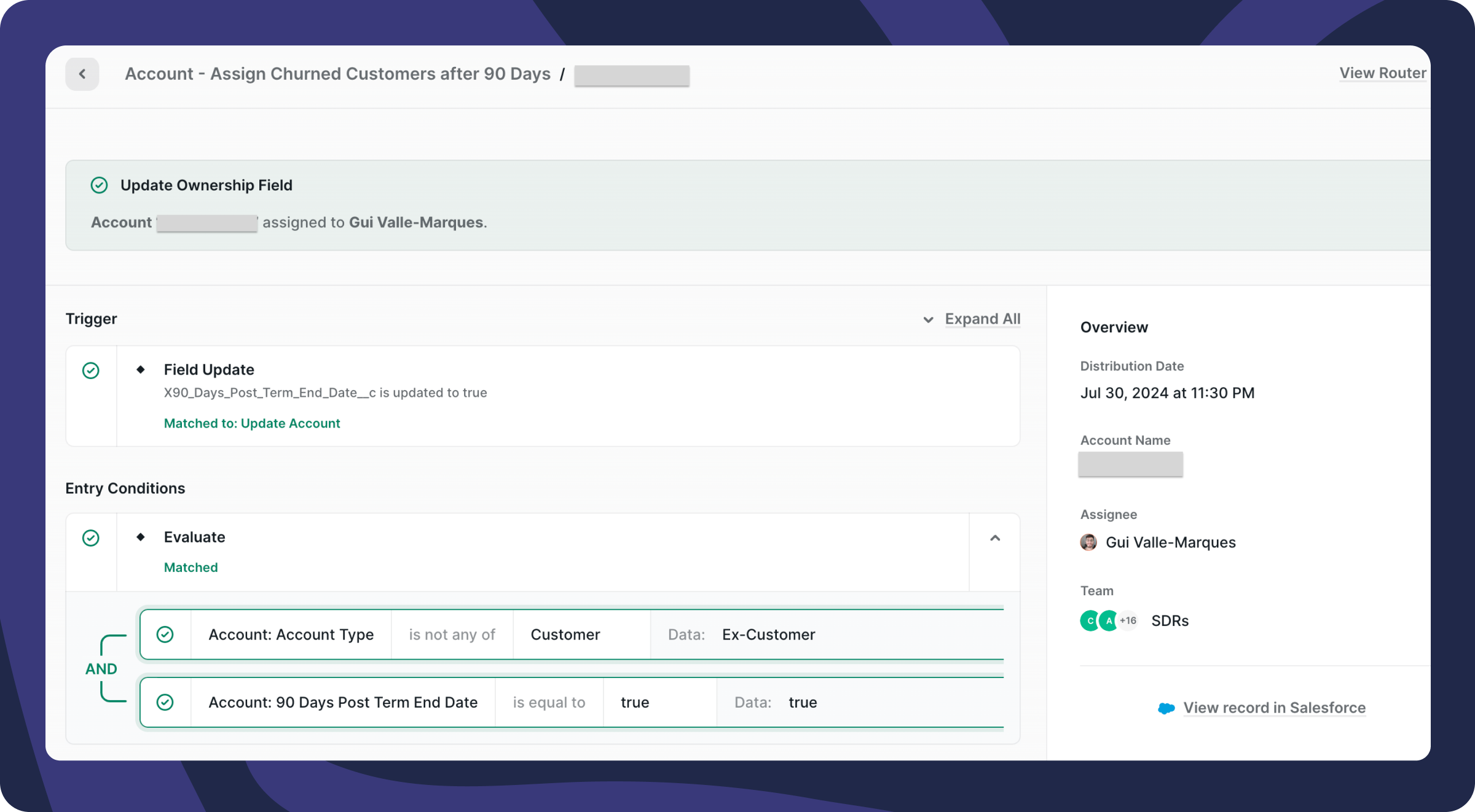
Account Status (Account) = updated to Churned
-
Transaction End Date (Account) = 91 days
-
Round robin across SDR team and update SDR Owner
-
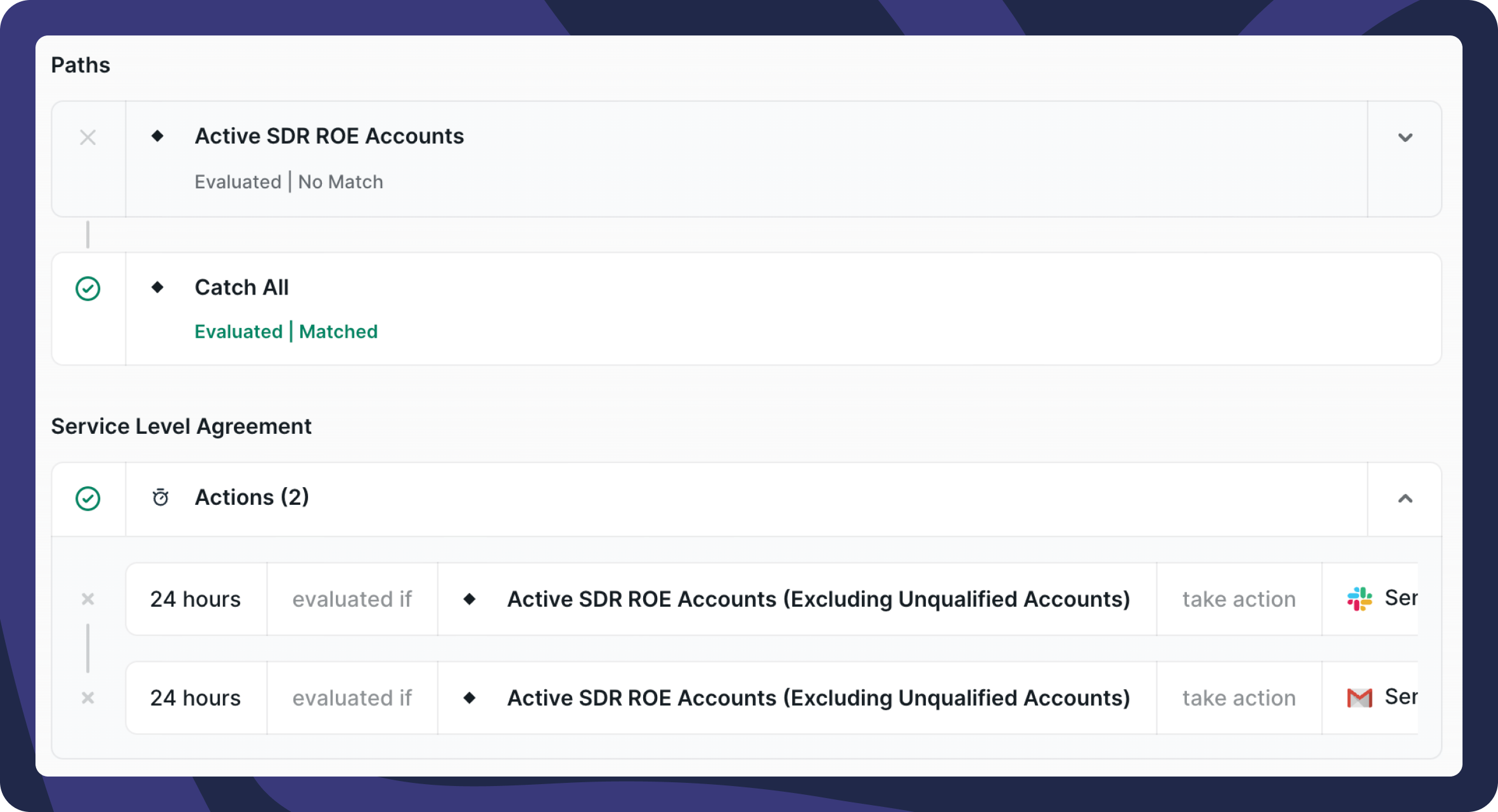
SLA - after 12 working hours, check if there’s activity less than yesterday AND ROE phase ≠ unfit to work - send Slack notification
-
SLA - after 12 working hours, check if there’s activity less than yesterday AND ROE phase ≠ unfit to work - reassign
Having your friendly neighborhood revenue operations pro automate this workflow within Distro helps streamline processes and boost sales productivity by reducing boring, manual work.
Here’s what this looks like in Chili Piper’s Flow Builder:
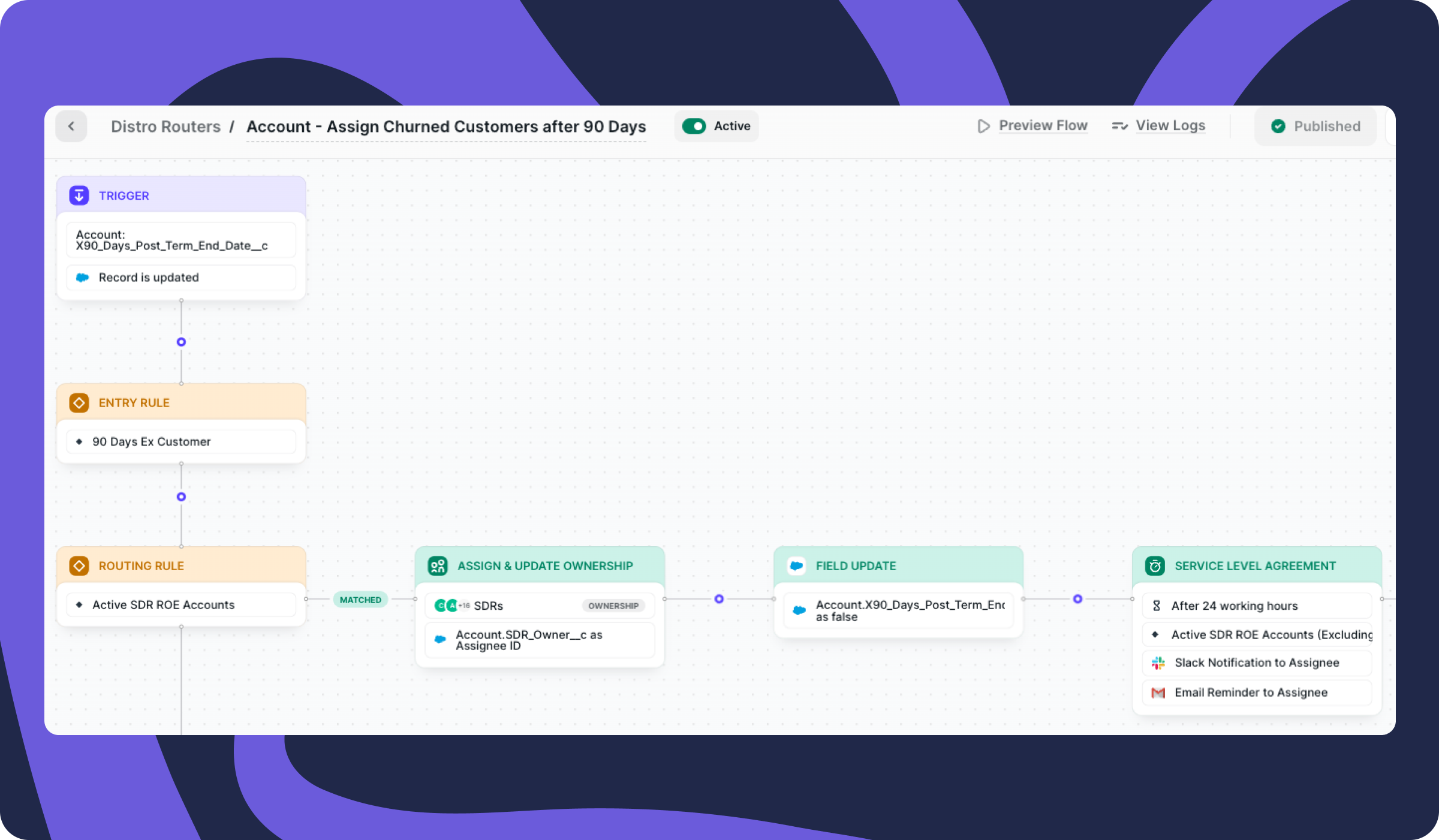
What’s not shown here but we’ve also built into the system are notifications to reps to help them meet SLAs and speed up productivity:
-
Provide a Slack notification to the AM (80 days post-contract end date)
-
Provide a Slack notification to the SDR once the Account has been assigned (91 days post-contract end date)
Nothing kills your outreach more than a plain, generic message. That’s why we also pay a lot of attention to enablement and provide reps with contextual information about the account. This should be done in a rep's workflow so that their rhythm isn’t disrupted. Because, let’s face it, we all get easily distracted. The information that we make sure reps have at their fingertips are things like:
-
The people involved in the original opportunity
-
The reason they chruned
-
New features that we might have launched
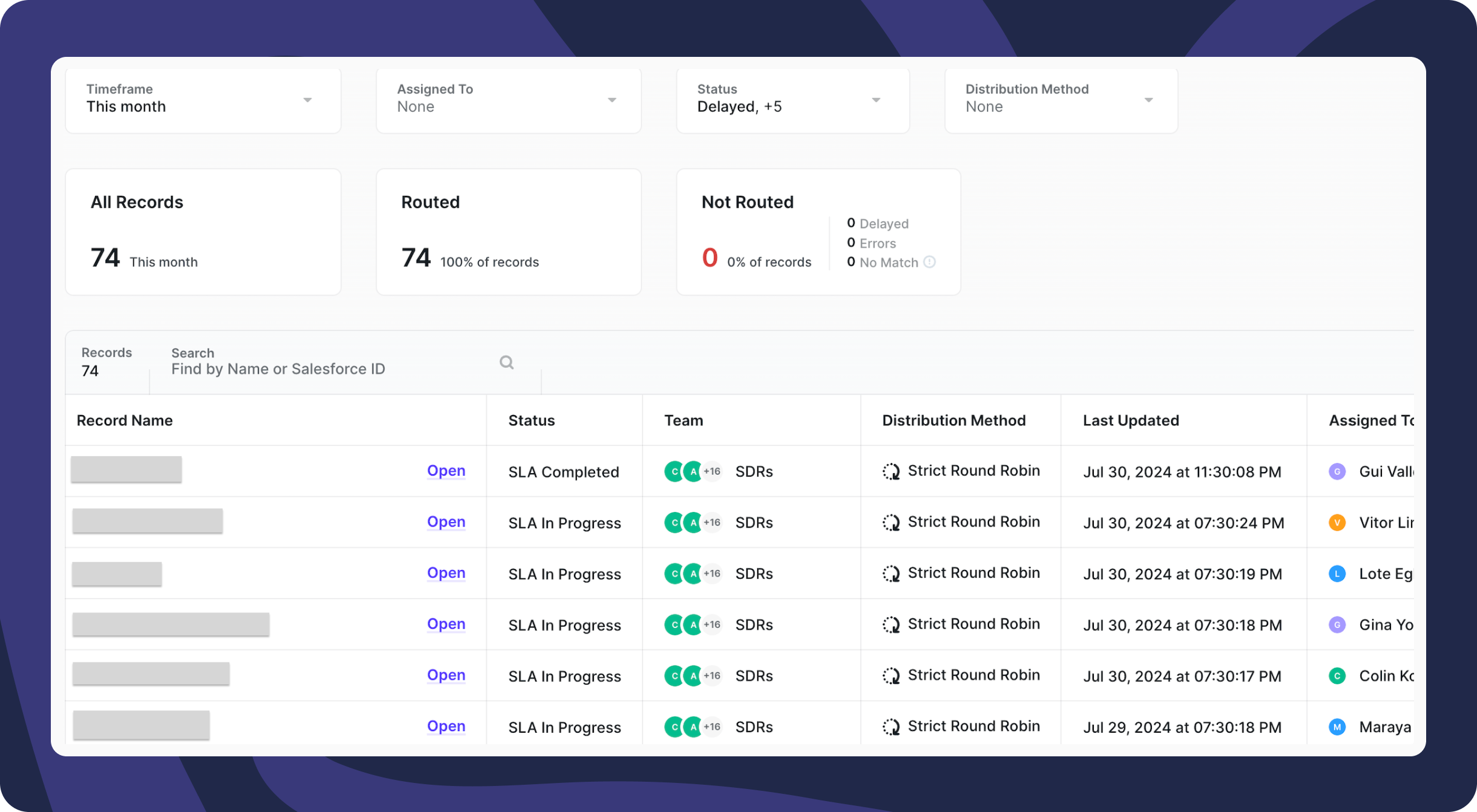
Lastly, teams and their managers need a view of these important accounts to monitor reps' performance and the initiative's overall status. By seeing which reps have the highest success rates, you can replicate their outreach messaging. By tracking the initiative's overall performance, you can ensure it is still worth your team’s time and effort.
Many other features of Chili Piper help your team operate like a well-oiled machine. For example, a popular feature is Vacation Calibration. Revenue operations and front-line sales managers love this one. This setting for Round Robin Queues defines the actions of the meeting distribution when a rep is out of the office. You can calibrate them during their vacation period, avoiding reps receiving multiple calls in sequence once they are back, or not. All of the pieces together help make this SpicyOps play to keep your pipeline hot.
The Results: SDRs Save Hours and Build Quality Pipeline
With this automated in Distro, SDRs no longer spend hours reviewing reports, checking and validating Rules of Engagement, or letting ex-customers slip through the cracks, never to be seen again.
Let’s do the math to see how much time this is saving the team. If your SDR spends 5 minutes on an ex-customer to determine if they are within the ROEs, and you’re a mid-market company that churns roughly 30 logos lost per month, this would save you 150 minutes per month, or 2.5 hours.
Not only that but now your outbound team doesn’t have to manually do all of the research to find out important information about the account as they would a new, cold prospect (e.g., tech stack, size, industry, revenue, etc.). Conservatively, this saves your outbound team another 10 minutes each per account. That’s 300 minutes saved for those 30 churned logos.
Now, you might be saying that’s great, but are your reps actually booking meetings with customers that churn? I bet your meeting rate is 0% for these accounts.
The answer is yes, we are booking meetings! And no, the meeting rate is not 0%. In fact, it is nearly identical to the target accounts our SDR team outbounds.
When it’s time to reconnect, we don’t just dive in with the old "Hey, missed you!" Instead, we take a walk down memory lane, peppering our outreach with a bit of humor and a dash of empathy. Whatever the reason they left, we tailor our cadence to acknowledge their past decision with a smile while also casually mentioning the cool new features we've launched that would be highly relevant to them. So, whether they’re ready to rekindle the flame or just curious about what’s cooking, we’re here to show them that we're ready and happy to help them again.
Ready to win back your churned customers and bring in more pipeline?